

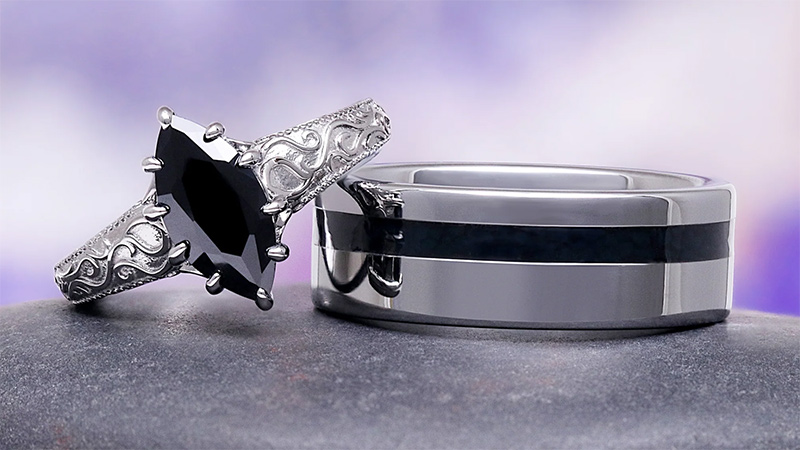
A black onyx engagement ring isn’t a trend piece. It’s what happens when a couple looks at the traditional diamond solitaire, shrugs, and picks something that actually looks like them instead. The stone is deep, opaque, and permanently black – no sparkle tricks, no light games, just a bold statement that reads the same in every light.
This guide covers everything you need before you buy one: what the stone actually is, how it holds up day to day, what it costs, and how to pair it with a matching wedding band if you’re planning a full his and hers wedding ring set down the line. No fluff, just what a jeweler would tell you across the counter.
What Is a Black Onyx Engagement Ring
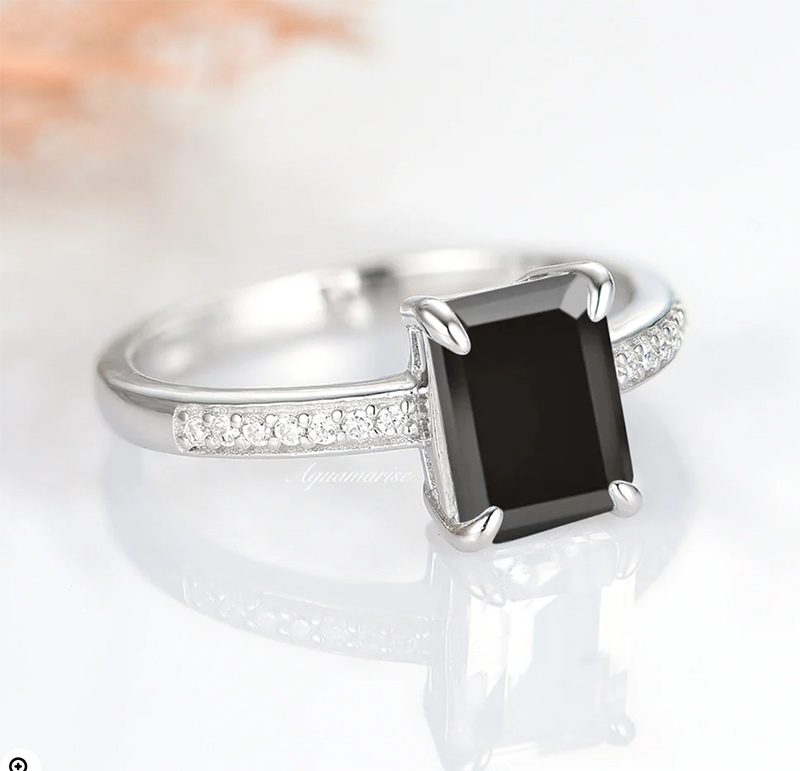
A black onyx engagement ring features a gemstone made from chalcedony, a variety of quartz that occurs in a genuinely solid, opaque black. That last word matters. Most “black” gemstones on the market aren’t actually black. Black sapphire is very dark blue, black diamond consists of heavily included white diamonds, and black spinel sits closer to charcoal gray. Onyx is the rare stone that’s truly, uniformly black from every angle, with a glassy polish that looks almost lacquered.
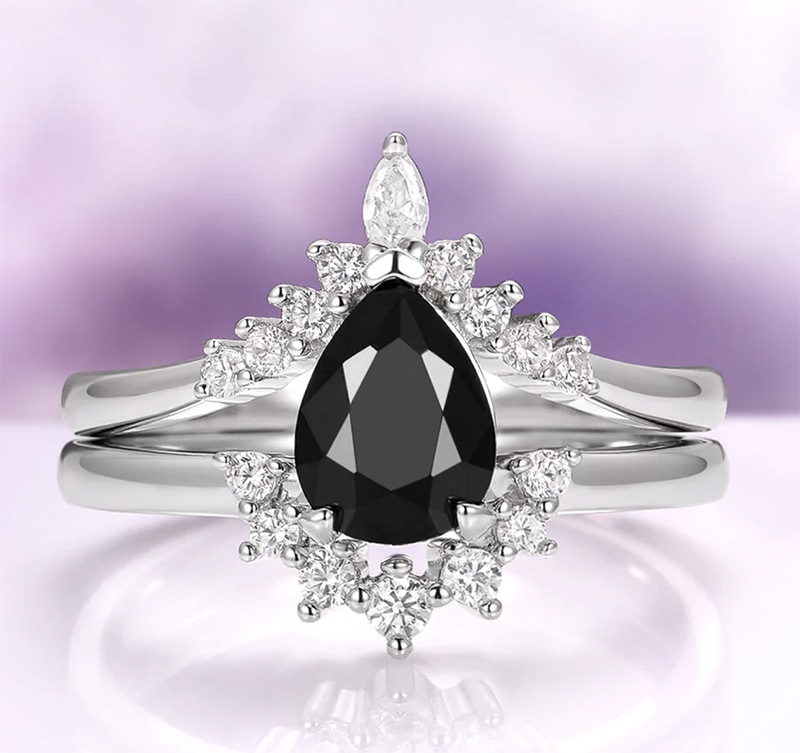
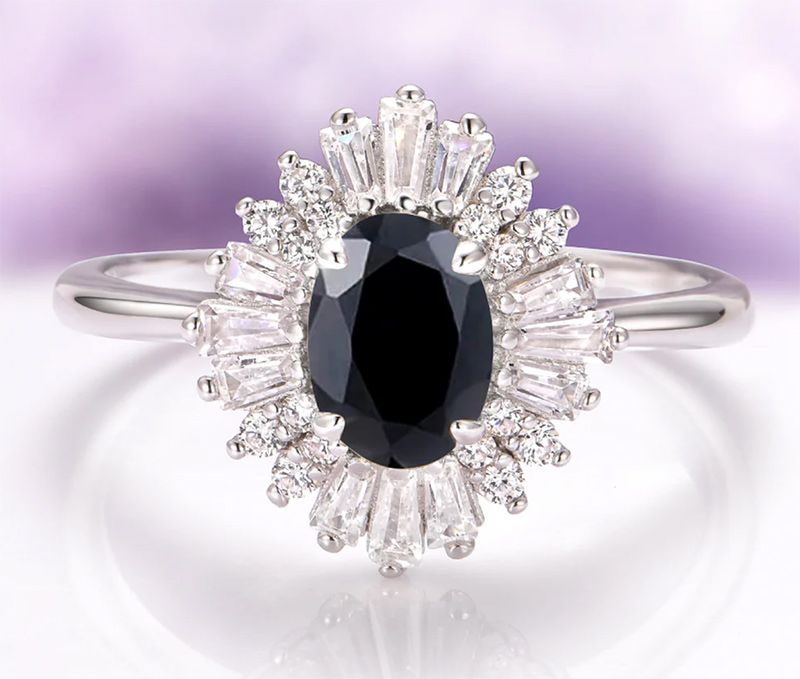
In an engagement ring, that solid color becomes the whole point. It doesn’t compete for attention the way a faceted stone does. It anchors the design instead, which is why so many black onyx engagement ring styles lean into bold settings such as bezels, halos, and vintage-inspired coffin or kite cuts rather than the delicate prong work commonly seen with diamonds.
Why It Matters (And Why Couples Are Choosing It)
Three things are driving the shift toward black onyx specifically, not just “dark stones” in general.
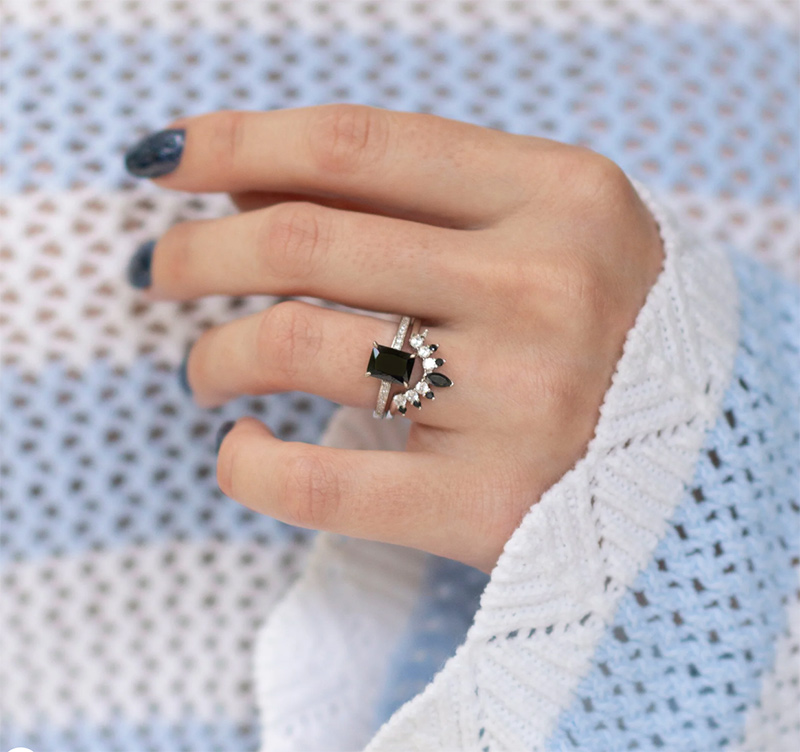
It’s the only truly opaque black option at engagement scale. If someone wants a stone that reads as pure black rather than “very dark,” onyx is really the only choice that delivers it consistently.
It’s durable enough for daily wear, with the right setting. Onyx sits at 6.5–7 on the Mohs hardness scale. That’s not diamond-level, but it beats opal and moonstone, two stones jewelers already consider engagement-appropriate. Pair it with a bezel or protective halo setting and the risk of chipping drops significantly, since onyx has no internal cleavage planes to fracture along.
It costs a fraction of comparable dark stones. A one- to three-carat black onyx center stone costs far less than an equivalent black diamond or dark sapphire, which means the budget can go toward better metal, a heavier band, or a more elaborate setting instead of just the stone.




Key Benefits at a Glance
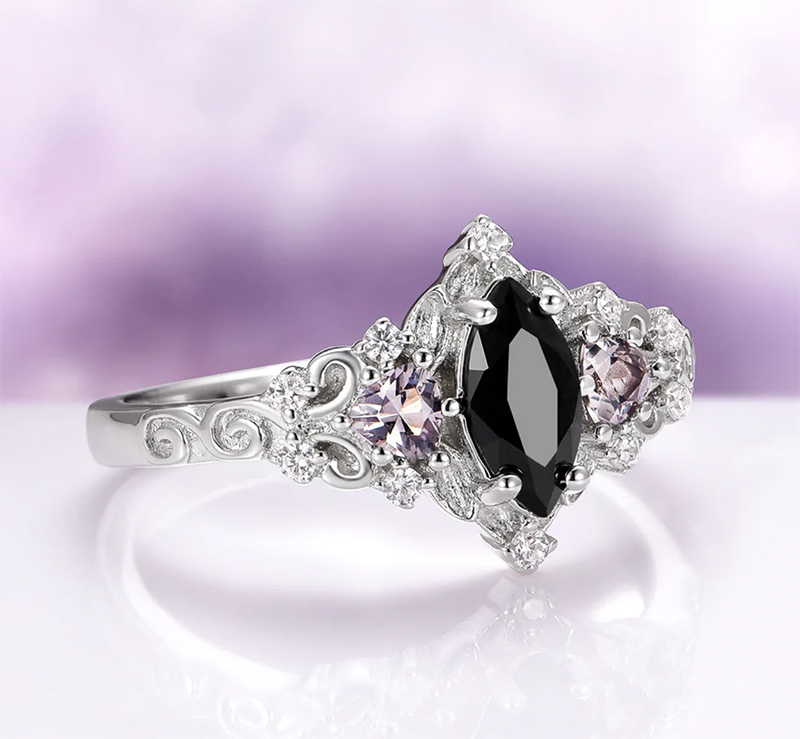
- Bold, photograph-ready contrast against any metal tone
- Genuinely unique – most guests won’t have seen one before
- Symbolically tied to strength, protection, and grounded commitment, with roots in Art Deco and Victorian mourning jewelry
- Budget-friendly relative to size and visual impact
- Works equally well in vintage, gothic, and minimalist modern settings
Important Factors to Consider
Setting protection. Because onyx is softer than diamond, the setting does more work. Bezel settings wrap the stone’s edge in metal and are the safest choice for someone who works with their hands often. Halo settings add a layer of smaller stones around the onyx for both protection and extra sparkle against the matte black.
Metal tone. Yellow and rose gold create a warm, vintage contrast against the black. White gold and platinum give a sleeker, more modern look. Neither is “correct” – it comes down to whether the rest of the ring’s design leans vintage or contemporary.
Stone treatment. Most commercial black onyx has been dyed to deepen and even out its color, which is standard practice and not a red flag. What matters is asking the retailer directly whether the stone is natural chalcedony (dyed or not) rather than glass or plastic – a real onyx will feel cool to the touch and won’t scratch with a copper coin.
Cut shape. Round and oval are the safest everyday choices. Pear, kite, hexagon, and coffin cuts lean into the gothic and Art Deco aesthetic that black onyx is often paired with.
Best Practices and Common Mistakes
Do choose a bezel or protective setting if the wearer has an active job or hobbies. Don’t assume onyx can be treated like a diamond – avoid ultrasonic cleaners and stick to warm water with mild soap and a soft cloth. Do ask about the stone’s origin and treatment before buying. Don’t buy a black onyx ring expecting sparkle; if brilliance is a priority, pair it with diamond or moissanite accents rather than expecting the center stone to do that job.
Expert Insight
Jewelers who work with colored gemstones regularly point out that black onyx rings age well precisely because the color doesn’t rely on light performance. A diamond can look different indoors, outdoors, under warm bulbs. Black onyx looks the same everywhere, which is part of why it photographs so consistently in engagement and wedding photos taken across different venues and lighting.
From Engagement Ring to His and Hers Wedding Ring Sets
Once the engagement ring is chosen, most couples start thinking about the wedding bands – and this is where his and hers wedding ring sets come in. The strongest sets aren’t identical twins; they’re connected through a shared detail scaled differently for two people. That might mean a wider band with a black onyx or moss agate inlay for him, paired with a slimmer version of the same stone and finish for her.
The goal is a pair that reads as a set from across the room without forcing both partners into the same ring style. A textured, dark-finish tungsten band for him next to a delicate onyx-accented gold band for her still tells the same visual story – same theme, different proportions.
If the engagement ring already features black onyx, carrying that stone into at least one of the wedding bands creates a cohesive bridal set without matching everything exactly. A single shared element – the stone, the metal finish, or an engraved detail – is usually enough.
Buying Guide: What to Check Before You Order
- Confirm the stone is genuine chalcedony, not glass or resin.
- Choose bezel or halo protection if daily wear is a concern.
- Match the metal to the wearer’s existing jewelry and skin tone.
- Decide on cut shape based on vintage vs. modern preference.
- If planning a full set, choose a design with a matching or coordinating men’s band available.
- Order at least 6 weeks ahead if engraving or customization is involved.
Frequently Asked Questions
Is black onyx durable enough for an engagement ring?
Yes, with the right setting. At 6.5–7 on the Mohs scale, it’s suitable for daily wear when protected by a bezel or halo, though it should still be removed for heavy manual work.
How much does a black onyx engagement ring cost?
Most fall between $500 and $4,000 depending on stone size, metal type, and setting complexity – significantly less than a comparable black diamond ring.
Can black onyx be paired with diamonds?
Yes. Diamond accents around a black onyx center create contrast and add sparkle the stone doesn’t have on its own.
Do his and hers wedding sets have to match exactly?
No. The strongest sets share one connecting detail – a stone, finish, or engraving – rather than being identical designs in two sizes.
How do I clean a black onyx ring?
Warm water, mild soap, and a soft cloth. Avoid ultrasonic cleaners and harsh chemicals, which can affect the polish over time.
Final Statement
A black onyx engagement ring works best for couples who want a ring that looks deliberate rather than default – something that still reads as fine jewelry without following the diamond solitaire script. Protect the stone with the right setting, confirm authenticity before buying, and if a wedding set is next on the list, carry one shared detail from the engagement ring into both bands. That’s what turns two separate rings into a set that actually looks chosen together.