
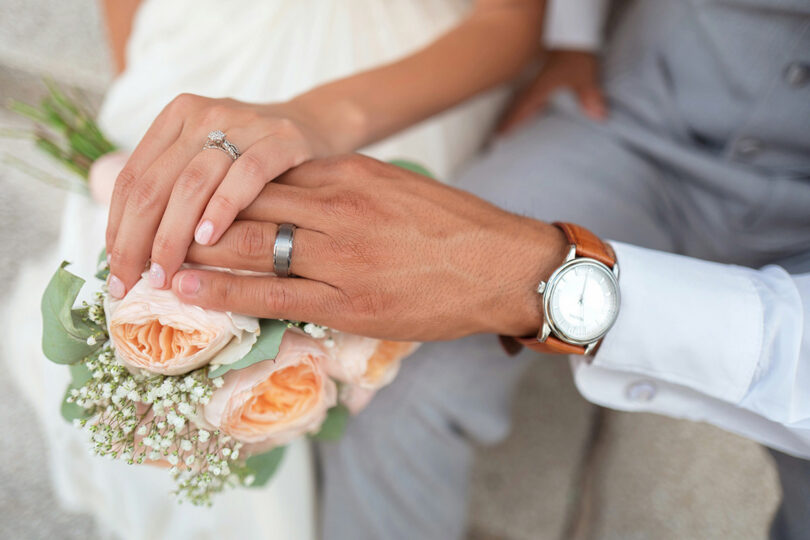
No accessory works harder than a wedding ring. It is the one piece you put on every morning and never take off.
That makes it the clearest statement of personal style most of us will ever make. For a century, it was also the least personal.
One white diamond, one plain band, done. That consensus is finally loosening, and the data behind it is more interesting than the usual trend talk.
The Rulebook Has Genuinely Loosened
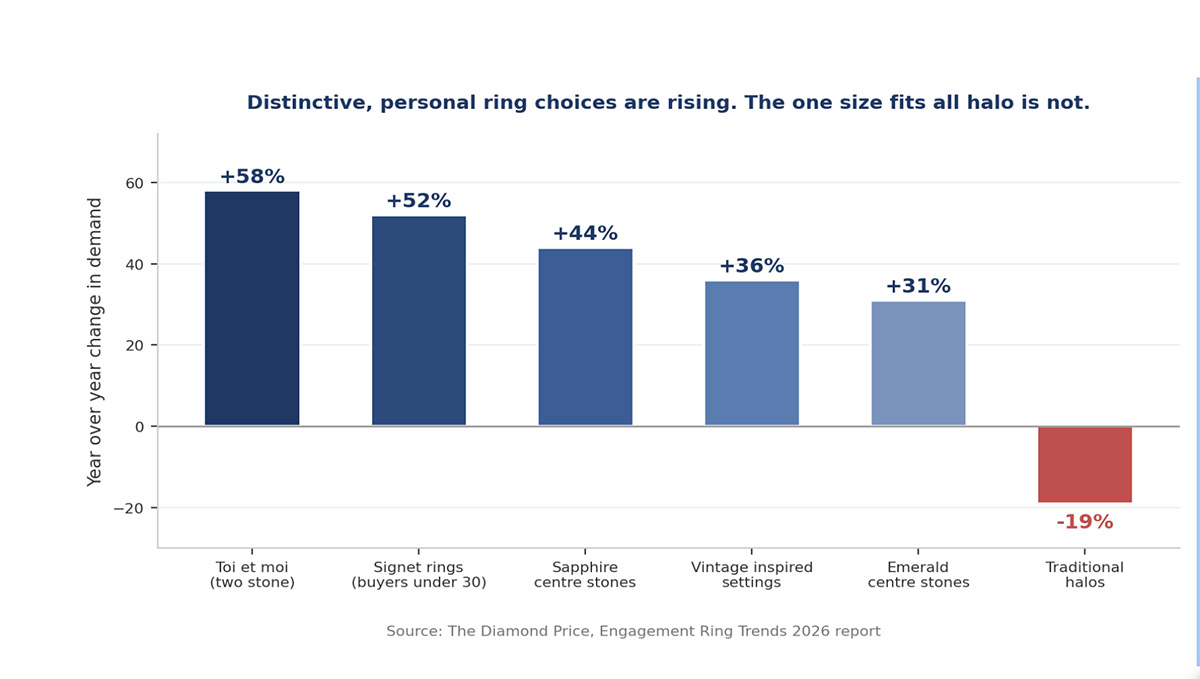
Distinctive choices are the ones growing. Two stone toi et moi designs are up 58 percent year over year, and signet style engagement rings are up 52 percent among buyers under thirty.
Colour is climbing too. The jeweller Austen and Blake reported coloured gemstone sales up 55 percent year over year, and coloured diamonds up 22 percent.
One honest caveat belongs here. Diamonds still dominate the centre stone market by a wide margin, and several analysts note that coloured stones are forecast more enthusiastically than they are actually bought.
The shift is real. It is simply smaller than the headlines suggest.



Choose the Stone Before the Setting
Personality lives in the stone. A setting can be adjusted later, but the colour on your hand is the decision everyone reads first.
This is where independent ateliers tend to pull ahead of the chain retailers, because their inventory is not built around a single stone.
The Athens studio behind women’s fine rings by litofinejewelry.com works across more than thirty stones, from ruby and sapphire to moonstone, tanzanite and fire opal, alongside a dedicated I DO collection for brides.
Pieces run in 14k and 18k gold across yellow, white and pink, which matters more than it sounds. Metal changes how a coloured stone reads.
Yellow gold warms a stone and gives it a vintage, candlelit quality. White metals keep the same colour looking crisp and modern.
Match the Stone to the Life You Actually Live
Here is the practical constraint nobody mentions at the counter. Household dust contains quartz particles at Mohs 7 to 7.5.
Any stone softer than that can be scratched by ordinary dust over time. This is why hardness is not a technicality.
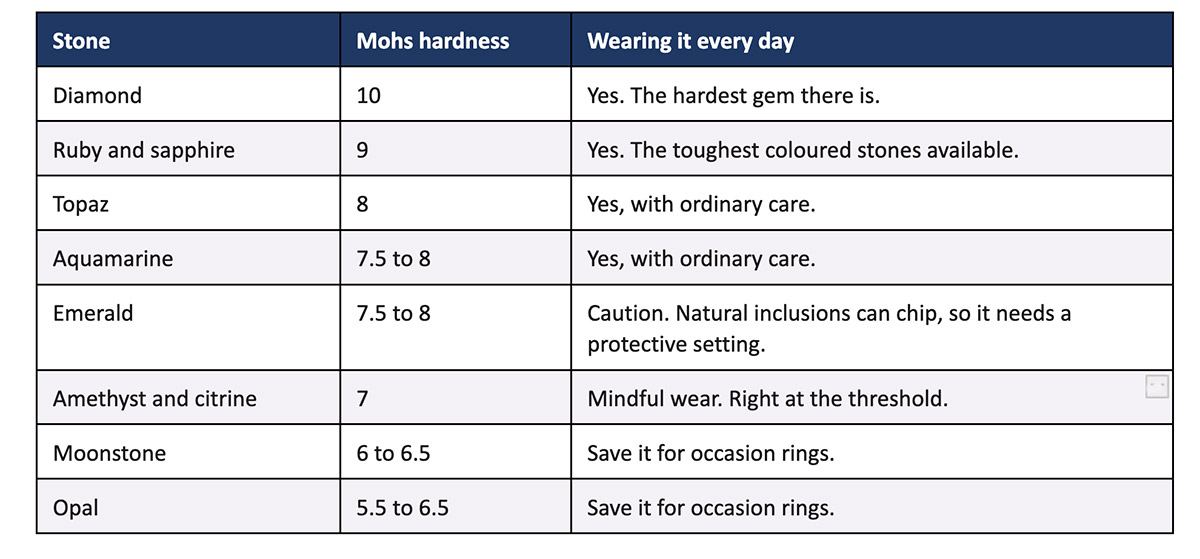
None of this rules out a softer stone. It simply means an opal belongs in a ring you wear on occasions, or in a protective bezel rather than raised prongs.
Build a Stack That Reads as Deliberate
Stacking is where most brides express personality after the wedding, and there are real rules behind the ones that look effortless.
The Gemological Institute of America advises placing the thickest band at the bottom when widths differ, and leaving comfortable room between the stack and your knuckle.
Mixing metals works if you repeat the metal rather than introduce it once. A single stray rose gold band reads as an accident, while two reads as a decision.
Speaking to National Jeweler, Katelyn Meche, director of bridal at Stuller, described the maximalist mood in fashion jewellery now working its way into the bridal market.
The same report captured the underlying shift neatly, noting that people want a wedding ring that flows with their other jewellery.
Our spotlight on craftsmanship in bridal jewellery looks at how that thinking plays out in the workshop.
Frequently Asked Questions
Will a coloured stone date faster than a diamond?
Sapphire and ruby have been used in engagement rings for centuries, so neither is a passing choice. The risk sits with the setting style rather than the stone.
Can I wear an emerald ring daily?
With a protective setting, often yes. Emerald sits at 7.5 to 8 on the Mohs scale but its natural inclusions make it prone to chipping, so raised prongs are a poor choice.
How many rings belong in a bridal stack?
Most brides settle on two to four. Beyond that the stack starts competing with itself, and thinner bands begin to wear against each other.
Does mixing metals look unfinished?
Not if it repeats. The same logic applies to a whole wedding palette, as our black, white and gold feature demonstrates.
The Bottom Line
A ring that reflects you is not the one with the rarest stone. It is the one whose colour, metal and hardness suit your hand and your ordinary days.
Choose the stone you keep returning to, then build the setting around it. More planning guidance sits in our tips and planning archive.