


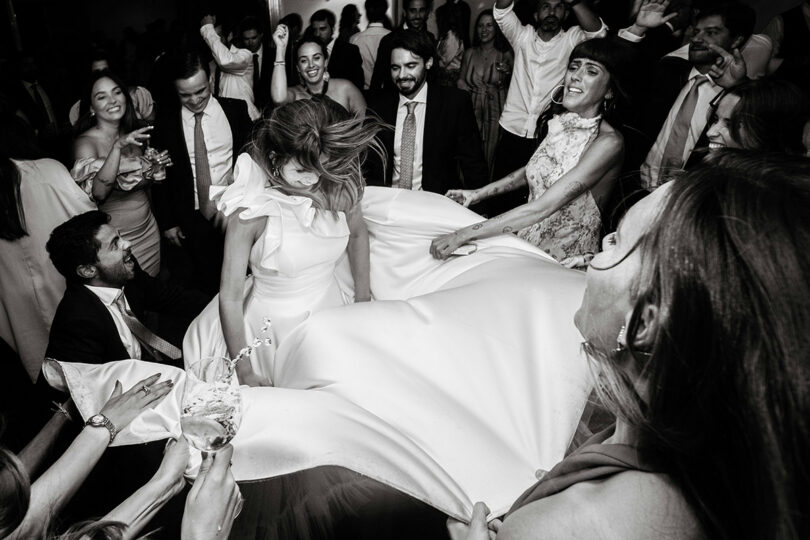
If you have ever been to a Jewish wedding, you already know the moment. The band kicks into high gear, someone grabs your hand, and before you fully understand what is happening you are moving in a circle with thirty other people, laughing and slightly out of breath. The hora is one of those traditions that hits you before you have time to think about it, which might be exactly the point. Like the best Jewish wedding gifts, it is something you didn’t know you needed until it was right in front of you. And like most things at a Jewish wedding, it carries a lot more meaning than it may appear on the surface.
Where the Hora Actually Comes From
The hora did not originate as a Jewish tradition. It began as a folk dance in the Balkans and southeastern Europe, particularly in Romania and Bulgaria, and was brought to Israel by early settlers in the late 19th and early 20th centuries. Jewish pioneers adopted it enthusiastically, and it became deeply embedded in Israeli culture as a symbol of communal joy and collective energy. From Israel it traveled with Jewish communities around the world, and it eventually became a staple of American Jewish celebrations, particularly weddings. What started as a regional folk dance became something much bigger: a physical expression of what it means to celebrate together.
What the Dance Actually Means
The circular shape of the hora is not an accident. Circles have held deep significance across Jewish tradition for centuries. A circle has no beginning and no end, which connects to ideas about eternity, unity, and the unbroken nature of community. When guests form a circle at a wedding, they are quite literally surrounding the couple with love and support. Everyone participates equally. There is no audience and no performers. You are either in the circle or you’re about to be pulled into it.
The chair lifting, which happens in most versions of the hora at weddings, adds another layer of meaning. The bride and groom are raised above the crowd on chairs while guests dance around them. This elevation is symbolic. The couple is being honored by their community, literally lifted up by the people who love them on one of the most important days of their lives. It is joyful and slightly terrifying in equal measure, which somehow makes it more meaningful rather than less.
Why It Endures
The hora has survived because it does something few other wedding traditions manage to do: it gets everyone involved. Grandparents, teenagers, small children, and people who swore they would not dance all end up in the circle eventually. It breaks down the formality that can settle over a wedding reception and replaces it with something unscripted, loose, and genuinely warm. Nobody is being observed. Everyone is just there, moving together and celebrating the same thing.
It’s worth understanding what you are stepping into the next time that music starts and someone grabs your hand. The hora is not just a fun moment. It is a piece of living history that connects everyone on the dance floor to generations of people who celebrated joy the exact same way.