




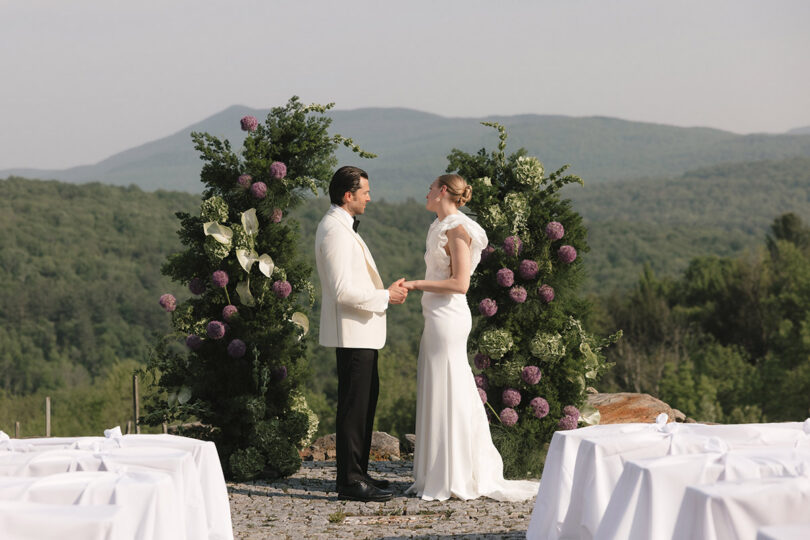
Choosing a wedding suit starts with three things: the dress code, the venue, and the season. A formal evening celebration may call for a tuxedo or a dark wool suit, while a daytime garden wedding can suit lighter fabrics, softer colours, and a more relaxed silhouette.
For Toronto grooms, weather and logistics matter too. A suit that feels comfortable during an outdoor summer ceremony also needs to work inside an air-conditioned reception space. For a fall or winter wedding, consider colder temperatures, transportation, and time spent outdoors for photographs.
Couples still defining the look of their celebration can browse our Toronto wedding inspiration before choosing the groom’s suit colour, fabric, and level of formality.
Here is how to choose a wedding suit that looks appropriate, feels comfortable, and still reflects your personal style.
Wedding Suit or Tuxedo?
The first decision is whether the wedding calls for a suit or a tuxedo.
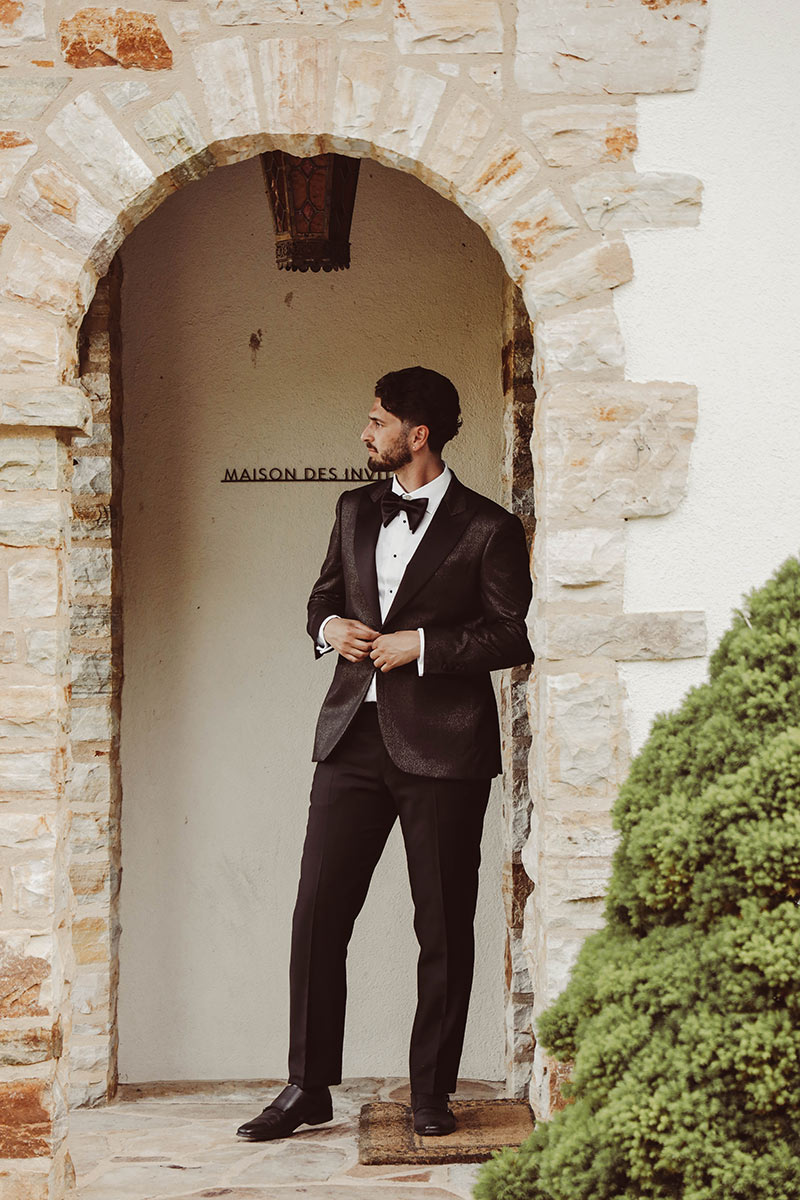
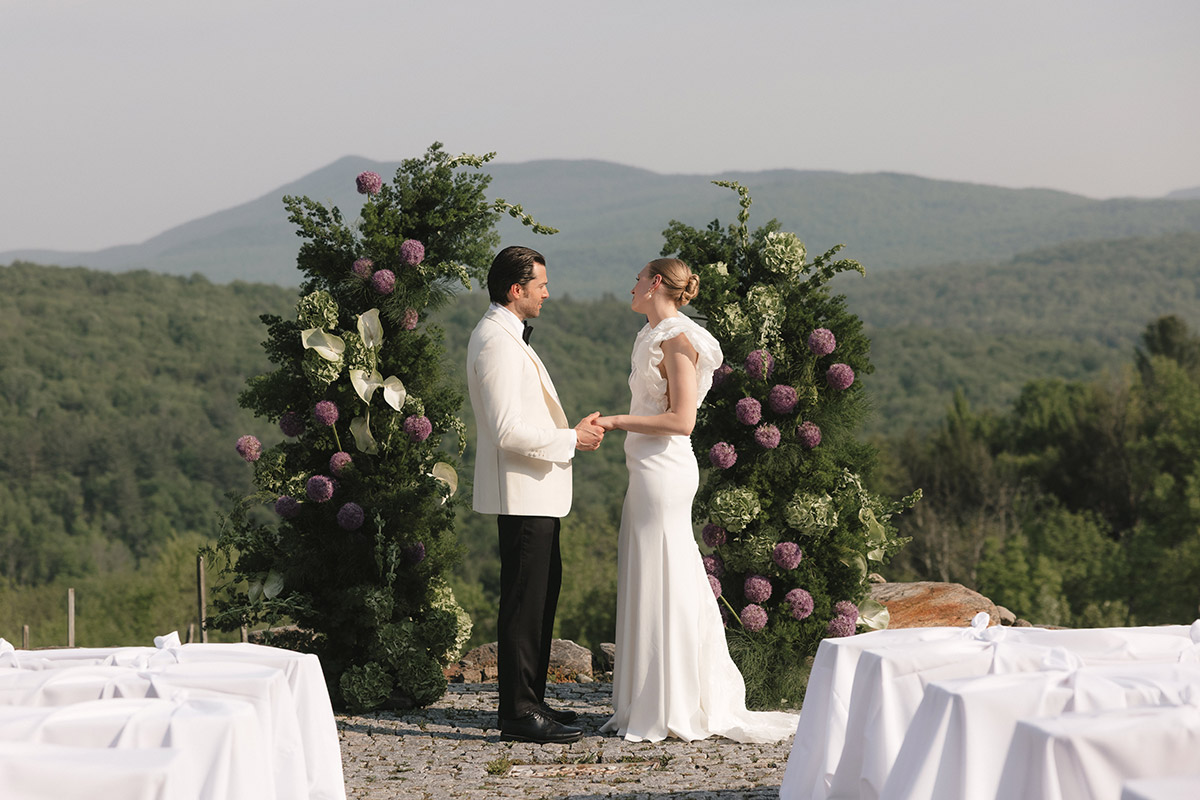
A tuxedo is traditionally the more formal choice. It is best suited to black-tie weddings, formal evening receptions, and venues with an elevated dress code. Tuxedos are usually distinguished by satin lapels, formal trousers, and accessories such as a bow tie.
A suit is more versatile. It can work for formal, semi-formal, cocktail, and daytime weddings, depending on its colour, fabric, and styling. A well-tailored navy, charcoal, or black suit can still feel refined while being easier to wear again after the wedding.
Choose a tuxedo when:
- The invitation specifies black tie.
- The wedding takes place in the evening.
- The venue and overall styling are highly formal.
- The couple wants a traditional, polished look.
Choose a suit when:
- The dress code is formal, semi-formal, or cocktail.
- The wedding takes place during the day.
- The setting is outdoors or more relaxed.
- Versatility and future wear are important.
Match the Suit to the Venue and Dress Code
The venue sets the tone for the groom’s outfit.
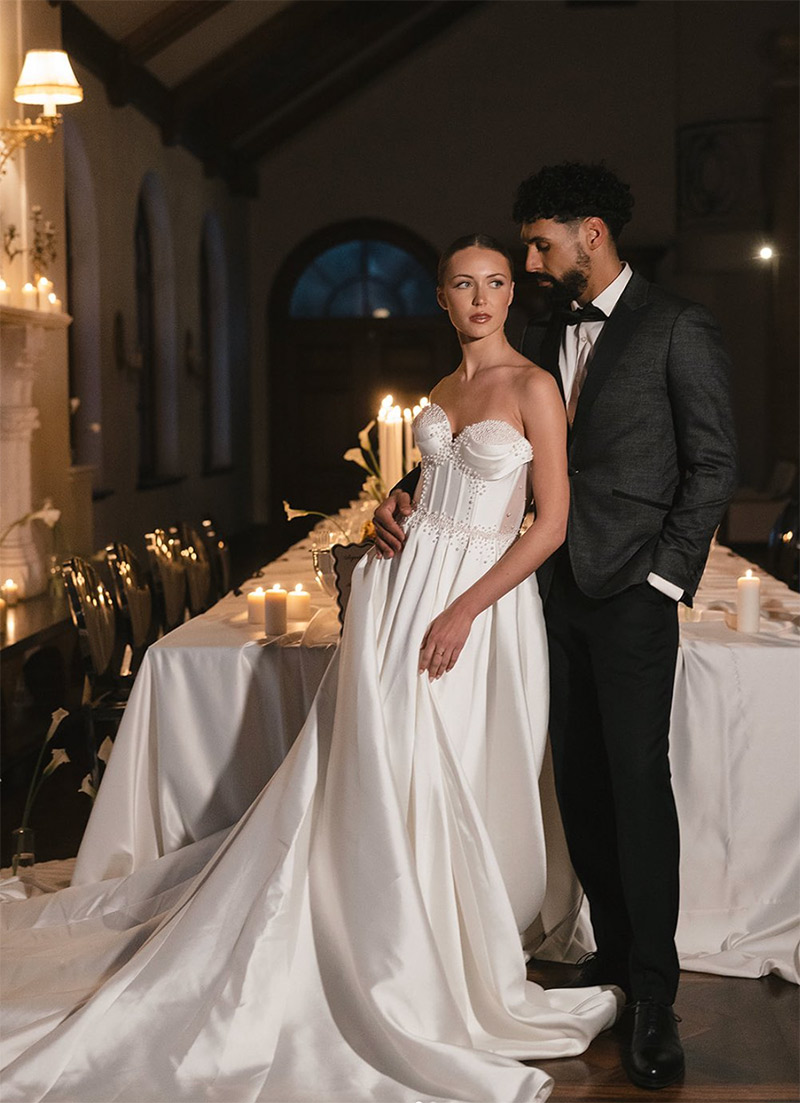
A ballroom, luxury hotel, or formal event space usually calls for a structured suit or tuxedo in a darker colour. A vineyard, garden, or outdoor venue may suit a lighter fabric, softer construction, and a more relaxed colour palette.
For an industrial or contemporary Toronto venue, a clean navy, charcoal, or black suit can complement the architecture without feeling overly traditional. For a romantic estate or garden setting, light grey, beige, taupe, or muted blue may feel more natural.
The groom does not need to match the venue exactly. The suit should simply feel appropriate for the setting and level of formality.
Before choosing a suit, confirm:
- The dress code stated on the invitation
- The ceremony and reception locations
- Whether the wedding is indoors or outdoors
- The time of day
- The overall wedding colour palette
- The formality of the partner’s attire
Choose the Right Fabric for the Season
Toronto’s distinct seasons can influence how a wedding suit feels throughout the day.
Spring Wedding Suits
Spring weather can change quickly, so a medium-weight wool suit is often a practical option. Navy, medium grey, and muted blue work well for both indoor and outdoor celebrations.
A lightweight overcoat may also be useful for an early spring wedding or outdoor photographs.
Summer Wedding Suits
For a warm-weather wedding, look for breathable fabrics and lighter construction. Lightweight wool, linen blends, and other breathable materials can help the groom remain comfortable during outdoor ceremonies and photography.
Linen has a relaxed appearance and naturally develops creases, making it better suited to casual or destination-inspired weddings. Lightweight wool usually provides a cleaner and more formal finish.
Colours such as light grey, beige, soft blue, and tan can work well for daytime summer weddings. Darker colours remain suitable for formal evening celebrations.
Fall Wedding Suits
Fall weddings allow for deeper colours and richer textures. Charcoal, navy, dark green, burgundy accents, and brown accessories can complement the season without making the outfit feel overly themed.
Medium-weight wool and subtly textured fabrics can add warmth and visual interest.
Winter Wedding Suits
Winter weddings generally suit darker colours and more structured fabrics. Charcoal, midnight blue, and black are reliable choices for formal celebrations.
Consider how the suit will work with an overcoat, scarf, and dress shoes, particularly when travelling between the ceremony, reception, and photography locations.
Select a Colour That Works With the Wedding Palette
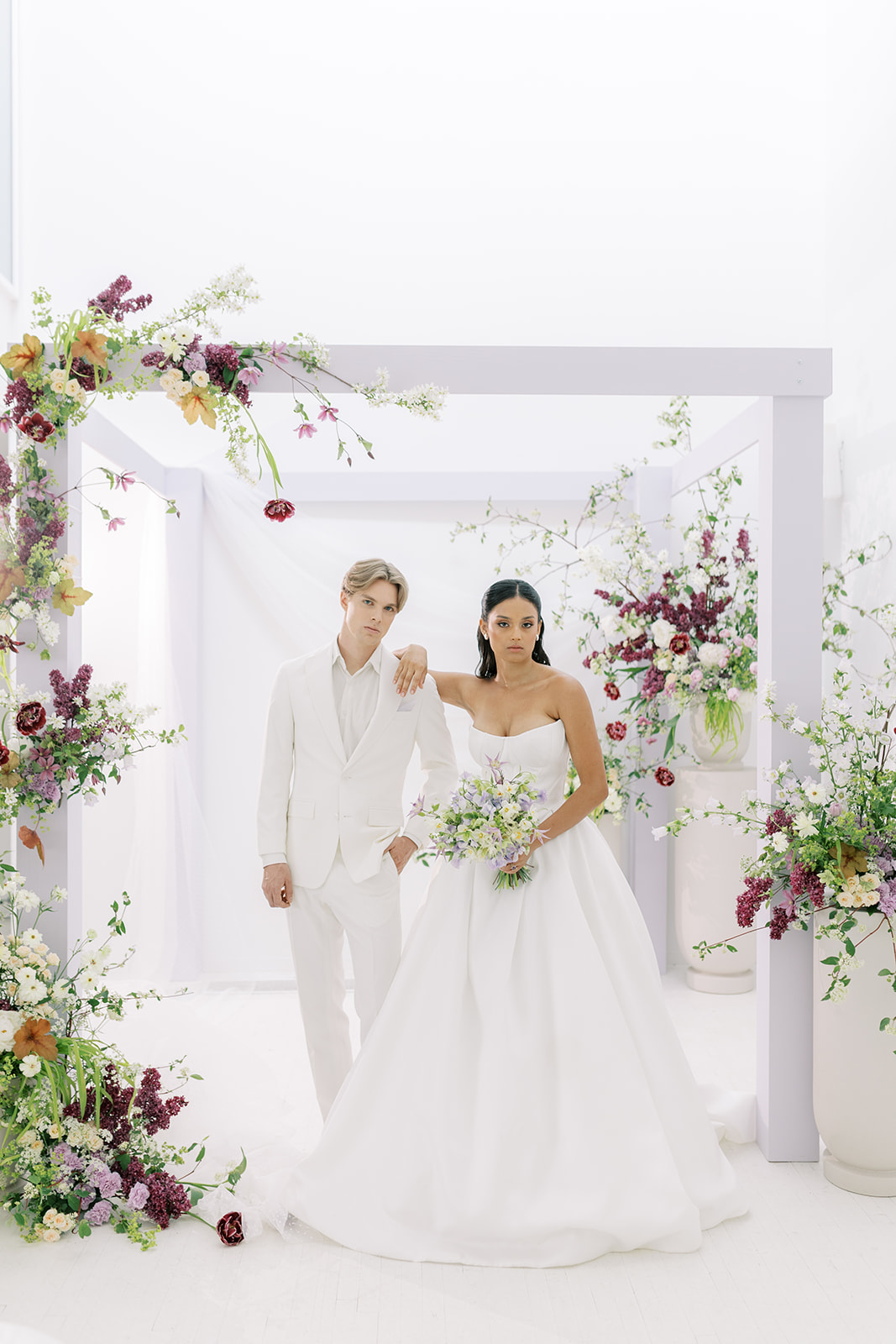
The groom’s suit should complement the wedding colours without looking like another decorative element.
Navy is one of the most versatile choices. It works across seasons, photographs well, and can be styled formally or casually.
Charcoal feels slightly more traditional and is particularly suitable for fall, winter, and formal evening weddings.
Black is best reserved for formal celebrations, tuxedos, or weddings with a sleek, monochromatic aesthetic.
Lighter shades such as beige, taupe, light grey, and soft blue are well suited to daytime, summer, and outdoor weddings.
Instead of matching the wedding colours exactly, use the shirt, tie, pocket square, boutonnière, or socks to introduce subtle references to the palette.
Help the Groom Stand Out From the Groomsmen
The groom should look connected to the wedding party while remaining easy to identify.
This distinction does not need to be dramatic. Small styling differences are often enough.
The groom can stand out through:
- A different suit colour or shade
- A tuxedo while the groomsmen wear suits
- A different tie or bow tie
- A waistcoat
- A unique boutonnière
- A contrasting pocket square
- Different lapels or suit fabric
- Personalized accessories
For example, the groom might wear a navy three-piece suit while the groomsmen wear two-piece suits in a similar shade. Another option is for everyone to wear the same suit while the groom chooses a different tie and boutonnière.
The outfits should feel coordinated rather than identical.
Focus on Fit
The quality of the fit will usually have a greater effect on the finished look than the price or brand of the suit.
A properly fitted suit should follow the groom’s shape without feeling restrictive. He should be able to sit, walk, raise his arms, and dance comfortably.
Grooms considering a more personalized fit can also read our feature on custom wedding suits in Toronto for a closer look at measurements, fabric choices, and personalized design details.
Wedding Suit Fit Checklist
- The jacket shoulders end where the groom’s shoulders end.
- The lapels lie flat against the chest.
- The jacket closes without pulling or forming an X shape.
- The jacket collar sits cleanly against the shirt collar.
- A small amount of shirt cuff remains visible.
- The sleeves do not cover the hands.
- The trousers stay comfortably at the waist.
- The trouser length works with the chosen shoes.
- The shirt collar is comfortable when fully buttoned.
- The groom can move naturally while wearing the complete outfit.
Attend the final fitting with the shoes, shirt, and accessories intended for the wedding. Even a well-fitted suit can look different once the full outfit is assembled.
When Should a Groom Buy His Wedding Suit?
The ideal timeline depends on whether the groom chooses ready-to-wear, made-to-measure, or bespoke tailoring.
A ready-to-wear suit may require less production time, but alterations and final fittings still need to be scheduled. Made-to-measure and bespoke suits usually involve additional measurements, production stages, and fittings.
Begin early and confirm the exact production and fitting timeline directly with the retailer or tailor.
Suggested Planning Sequence
- Confirm the wedding dress code and overall style.
- Research suit or tuxedo options.
- Book an initial consultation or fitting.
- Select the fabric, colour, and construction.
- Complete alterations or follow-up fittings.
- Try on the complete outfit before the wedding.
- Arrange pressing, pickup, and storage.
Grooms who would like to discuss fabrics, measurements, and customization directly with the featured tailoring partner can visit Blandin & Delloye Toronto to view the boutique details and appointment information.
Choose the Shirt and Shoes
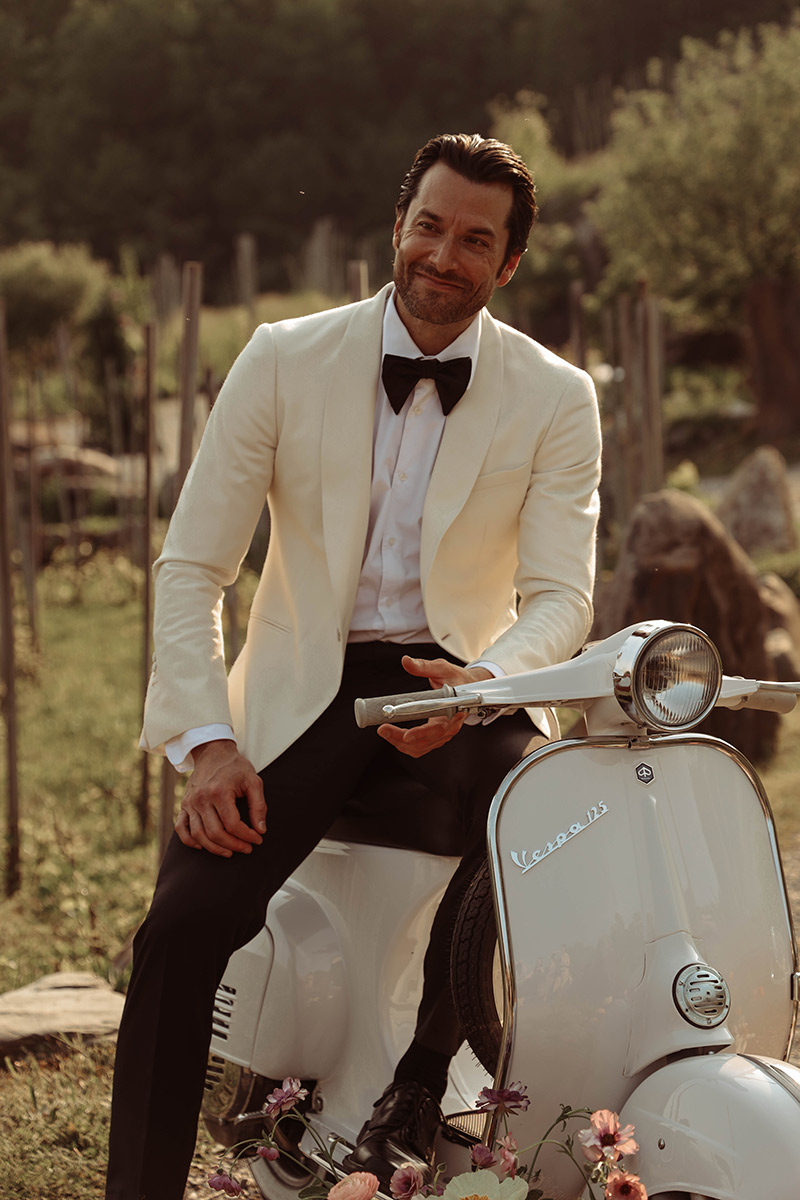
A white dress shirt is the most versatile and formal choice. It works with almost every suit colour and creates a clean appearance in photographs.
Soft ivory, pale blue, or subtly textured shirts can also work, depending on the suit and dress code. Strong patterns should be used carefully so they do not compete with the suit, tie, or wedding styling.
Shoes should match the formality and colour of the suit.
- Black shoes with black or charcoal suits
- Dark brown shoes with navy suits
- Medium brown shoes with lighter blue or grey suits
- Loafers with relaxed summer or destination-style outfits
- Formal black shoes with a tuxedo
The groom should wear the shoes before the wedding to make sure they are comfortable.
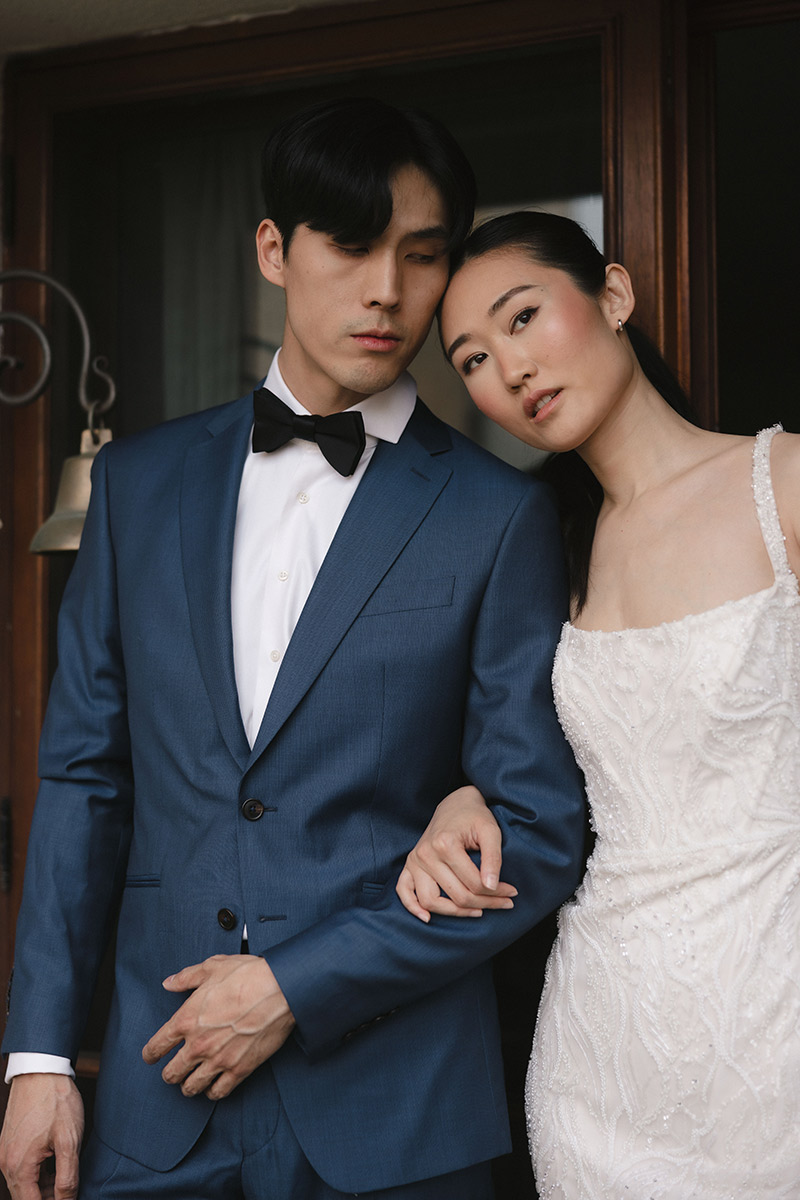
Add Personal Details Carefully
Accessories allow the groom to express his personality without overpowering the outfit.
Options include:
- A watch
- Cufflinks
- A tie bar
- A pocket square
- A meaningful lapel pin
- Personalized embroidery
- A family heirloom
- Distinctive socks
- A boutonnière connected to the floral design
One or two meaningful details will usually have more impact than several competing accessories.
Metal finishes should also feel coordinated. Cufflinks, a watch, and a tie bar do not need to match perfectly, but they should look intentional together.
Consider Whether the Suit Can Be Worn Again
A wedding suit does not need to be limited to one occasion.
A navy, charcoal, or medium-grey suit can often be worn again for dinners, formal events, business occasions, and other weddings. Changing the shirt, tie, shoes, and accessories can create a completely different look.
A tuxedo or highly distinctive suit may have fewer uses, but it can still be the right choice when the wedding calls for a specific level of formality.
The outfit should suit the wedding first. Future versatility is a benefit, not the only consideration.
Toronto Groom Wedding Suit Checklist
- The suit matches the wedding dress code.
- The fabric works for the season.
- The colour complements the venue and wedding palette.
- The groom looks distinct from the groomsmen.
- The jacket and trousers fit properly.
- The shirt and shoes have been tried on with the suit.
- The groom can move and sit comfortably.
- The accessories feel intentional.
- The complete outfit has been photographed during a fitting.
- The final pickup or pressing plan is confirmed.
Frequently Asked Questions
Should a groom wear a suit or tuxedo?
A tuxedo is generally best for black-tie and highly formal evening weddings. A suit is more versatile and works for most formal, semi-formal, and daytime celebrations.
What suit colour is best for a wedding?
Navy and charcoal are among the most versatile choices. Black works well for formal weddings, while light grey, beige, and soft blue can suit daytime or warm-weather celebrations.
Should the groom match the groomsmen?
The groom should coordinate with the groomsmen, but he does not need to match them exactly. A different tie, waistcoat, boutonnière, suit shade, or fabric can create a clear distinction.
What is the best fabric for a summer wedding?
Lightweight wool and breathable fabric blends can provide comfort while maintaining a polished appearance. Linen may work for more casual weddings but has a naturally relaxed, creased finish.
When should a groom start shopping for a wedding suit?
The timeline depends on the type of suit and the retailer or tailor. Start early enough to accommodate consultations, production, alterations, and a final fitting. Confirm exact lead times with the chosen provider.
How should a wedding suit fit?
The shoulders should sit cleanly, the lapels should lie flat, and the jacket should close without pulling. The trousers should sit comfortably at the waist, and the groom should be able to move, sit, and dance without restriction.