





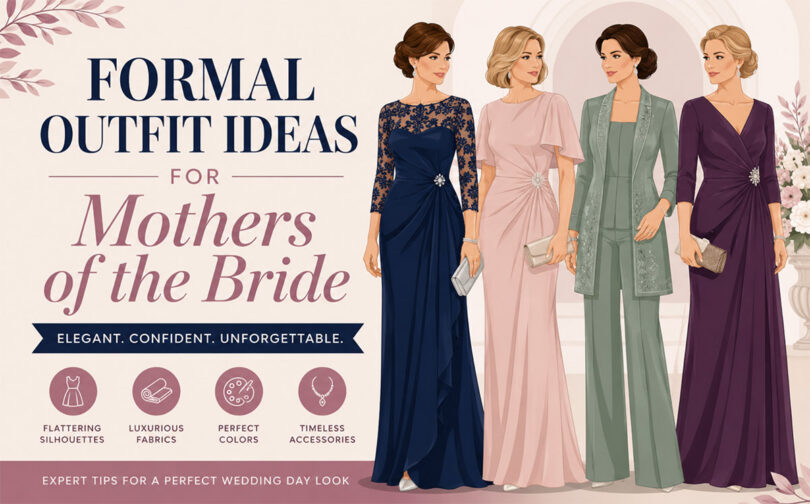
The mother of the bride holds one of the most honored positions at her daughter’s wedding ceremony. She is photographed as much as the bridal party, greeted by every guest, and present in every family portrait that will be kept for generations as a memory. Choosing the right formal outfit is not a matter of following trends but selecting attire that reflects the weight of the occasion and the personal grace each mother brings to it.
Below, we cover every aspect of formal mother of the bride attire, from silhouettes and fabrics to color coordination and accessories, so you can approach this decision with clarity and confidence.
What Counts as Formal Wedding Attire for the Mother of the Bride
Formal wedding attire for the mother of the bride falls within a specific dress code that sits between cocktail and black tie. It calls for floor-length or midi-length garments in fabrics, refined construction, and colors that coordinate with the wedding palette. The outfit must be appropriate from the ceremony through the reception, which means it should be both photogenic and comfortable for an extended occasion.
The two primary categories that meet this standard are formal gowns and pantsuits. Both options are equally accepted at formal weddings, and both carry the polish expected of the mother of the bride.
Formal Mother of the Bride Dresses Work for Every Figure
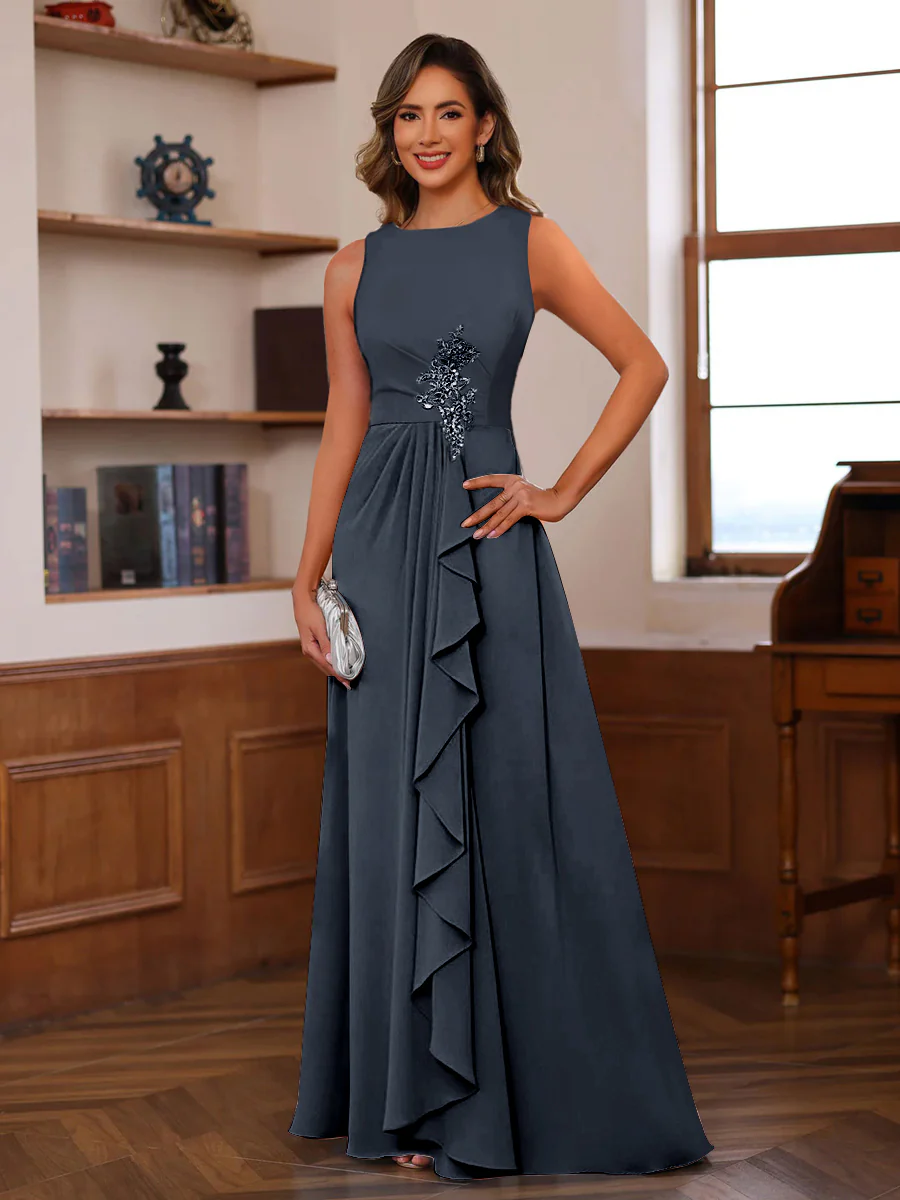
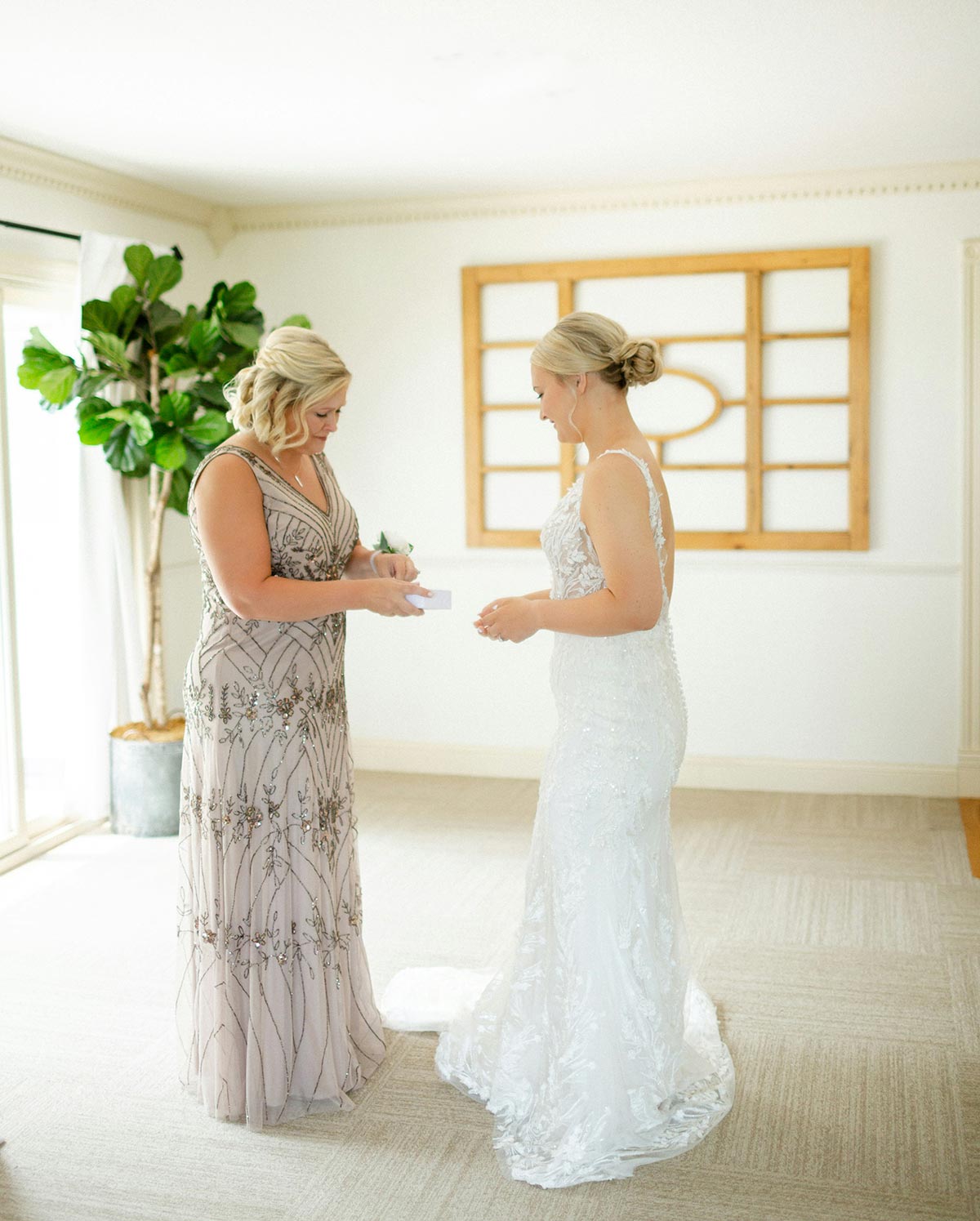
A formal gown remains the most traditional and widely chosen option for the mother of the bride. Collections available today are a significant departure from the stiff, conservative styles of previous decades. Current designs prioritize wearable silhouettes, breathable fabrics, and details that photograph with depth and elegance.
A Line Gowns
The A-line silhouette is fitted at the bodice and flows gradually outward from the waist. It is one of the most consistently flattering shapes across body types and works across all formal wedding settings from cathedral ceremonies to ballroom receptions. Chiffon, organza, and crepe are the most common fabric choices for this silhouette because they hold structure at the top while allowing movement through the skirt.
Column and Sheath Dresses
Column and sheath dresses follow a straight, close-fitting line from shoulder to hem. They are a strong choice for evening weddings and black-tie events where a sleek silhouette reads as sophisticated. Satin and crepe both perform exceptionally well in this cut, and the absence of volume makes fabric selection critical because the material carries the visual weight of the entire garment.
Fit and Flare Gowns
The fit-and-flare silhouette follows the body closely through the torso and flares at the knee or mid-thigh. It creates visible waist definition and adds movement to the lower portion of the gown. This silhouette is particularly effective for mothers who prefer a structured look with visual interest rather than volume.
Floor Length Formal Gowns
Floor-length gowns are the standard for cathedral, church, and ballroom weddings. They carry a sense of presence and ceremony that shorter lengths cannot replicate. In 2026, floor-length mother-of-the-bride gowns increasingly feature fluid skirts, soft trains, and detailing concentrated at the neckline or bodice rather than distributed across the entire garment.
Midi and Tea Length Dresses
Midi and tea-length options are gaining ground for daytime weddings, outdoor ceremonies, and destination events. These lengths maintain elegance while offering greater ease of movement and are particularly appropriate for garden weddings where full-length gowns can be impractical on uneven terrain.
Browse the complete collection of mother of the bride dresses to find the silhouette that suits your body type, the venue, and the formality of the occasion.
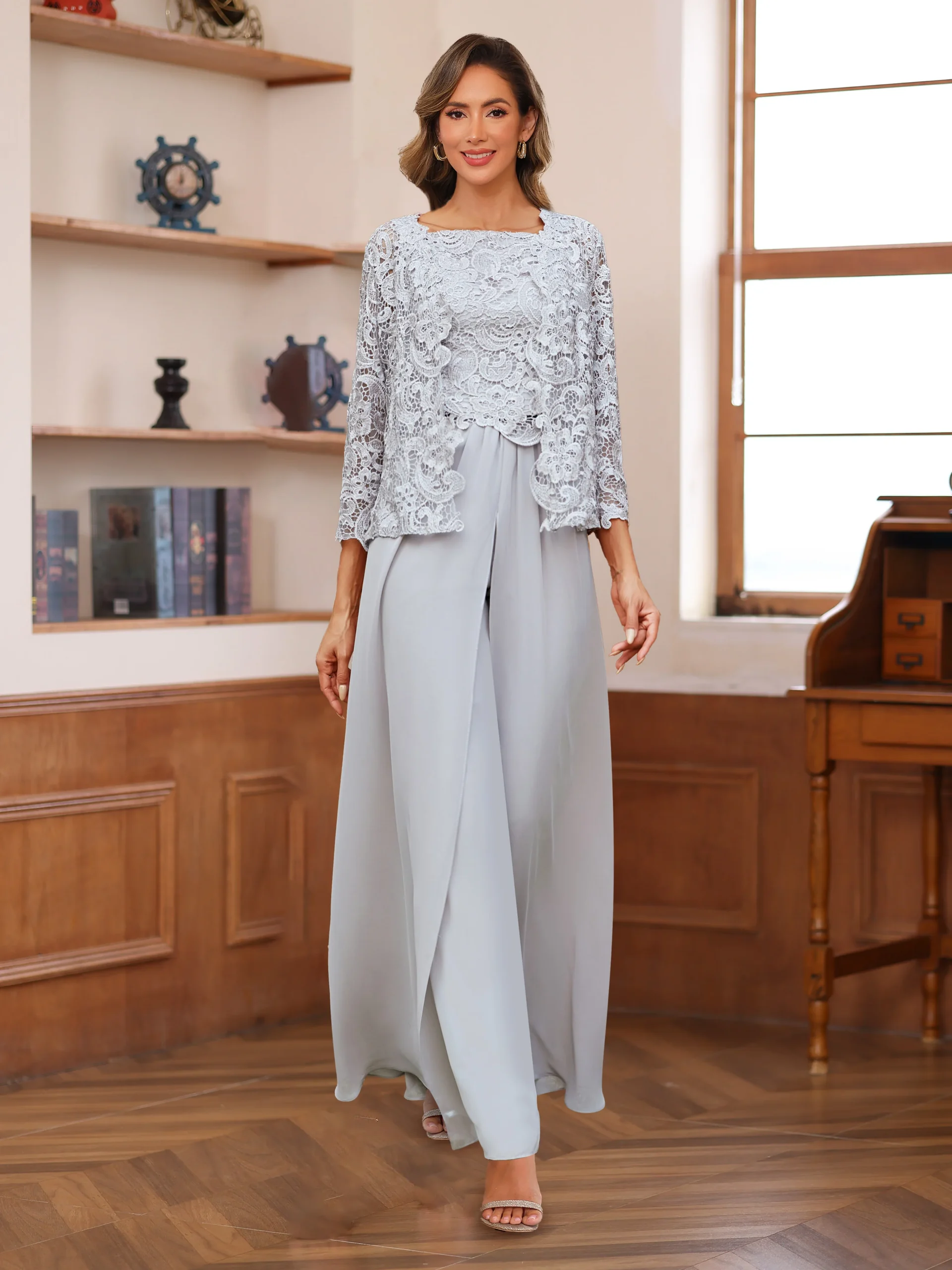
Mother of the Bride Pantsuits for the wedding ceremony
The pantsuit has moved well beyond being a peripheral option for the mother of the bride. It is now a widely respected choice that communicates personal style with precision. Designs in this category are specifically constructed for wedding formality rather than adapted from general occasion wear.
Why Pantsuits Belong at Formal Weddings
A well-constructed pantsuit in a luxury fabric carries the same level of formality as a floor-length gown when executed correctly. The key factors are fabric, fit, and finish. A structured blazer paired with tailored trousers in crepe, satin, or ponte projects confidence without sacrificing comfort. For mothers who have spent years in professional environments where tailored suiting is second nature, this option allows them to dress with the same authority on one of the most significant occasions of their lives.
Pantsuit Styles Worth Considering
Wide-leg palazzo suits in champagne, dusty rose, or sage offer fluid, relaxed elegance that reads as both modern and refined. Classic fitted trouser suits with a structured blazer in navy or deep plum are strong choices for evening receptions. Embellished jacket suits, where the blazer carries beading, embroidery, or sequined detail, provide the visual interest of a formal gown in a completely different silhouette. Matching sets with a coordinating silk blouse or draped camisole beneath the blazer add femininity to the structured line without softening its precision.
Styling a Formal Pantsuit
Footwear is critical to the success of a pantsuit at a formal event. Pointed-toe heels, strappy heeled sandals, or metallic mules all work well depending on the suit’s overall aesthetic. Jewelry should be restrained. A single statement earring, a fine bracelet, and a structured evening clutch complete the look without competing with the tailoring.
Explore the full range of mother of the bride pants suits to find cuts and colors that reflect your personal approach to formal dressing.
How to Choose a Dress Color That Works Together
Color is the most visible decision in a mother of the bride outfit. The goal is to coordinate with the wedding’s color palette without matching the bridal party exactly and without choosing a shade that competes with or overshadows the bride. The first step is to speak directly with the bride before beginning your search. Understanding the bridesmaid color palette, the floral scheme, and any color preferences she has for the family ensures that your selection is considered and collaborative.
Soft neutrals including champagne, taupe, dove gray, and warm ivory read as consistently appropriate across all formal wedding settings. They photograph well in natural and artificial light and sit comfortably alongside most bridal palettes.
Jewel tones such as sapphire blue, emerald green, deep plum, and burgundy are particularly suited to evening weddings and ballroom events. They carry depth and presence in formal lighting and pair naturally with the rich textures common in winter and autumn wedding aesthetics.
Muted pastels, including dusty blue, sage, blush, and soft lavender, are a strong choice for spring and summer weddings. These tones remain elevated and purposeful rather than casual, particularly when presented in structured silhouettes or luxurious fabrics.
Navy and black are both accepted at formal weddings in 2026. Navy has long been a reliable choice for its timelessness and versatility. Black is increasingly worn by mothers of the bride at formal and evening weddings, styled with refined fabrics and elevated accessories to distinguish it clearly from general occasion wear.
Colors to avoid include white, ivory, and any shade close enough to be mistaken for bridal. Exact duplication of the bridesmaid color is also best avoided unless specifically coordinated with the wedding party.
Fabric Choices That Define Formal Occasion Wear
Fabric is as important as the silhouette in formal mother-of-the-bride attire. The material determines how the garment moves, how it responds to light, how it holds its shape through a long event, and how it reads in photographs.
Chiffon is lightweight and fluid and carries well in photographs and video. It is commonly used in layered skirts and as an overlay on structured bodices. Its movement makes it particularly suited to outdoor and garden ceremonies.
Crepe offers a clean, smooth finish with gentle stretch. It holds a precise silhouette without rigid structure and maintains its shape reliably across extended wear, making it one of the most practical choices for a full-day wedding event.
Satin brings a high-sheen finish that reflects warm artificial light with clarity. It is most appropriate for evening events and is a standard choice for column gowns and formal trouser suits.
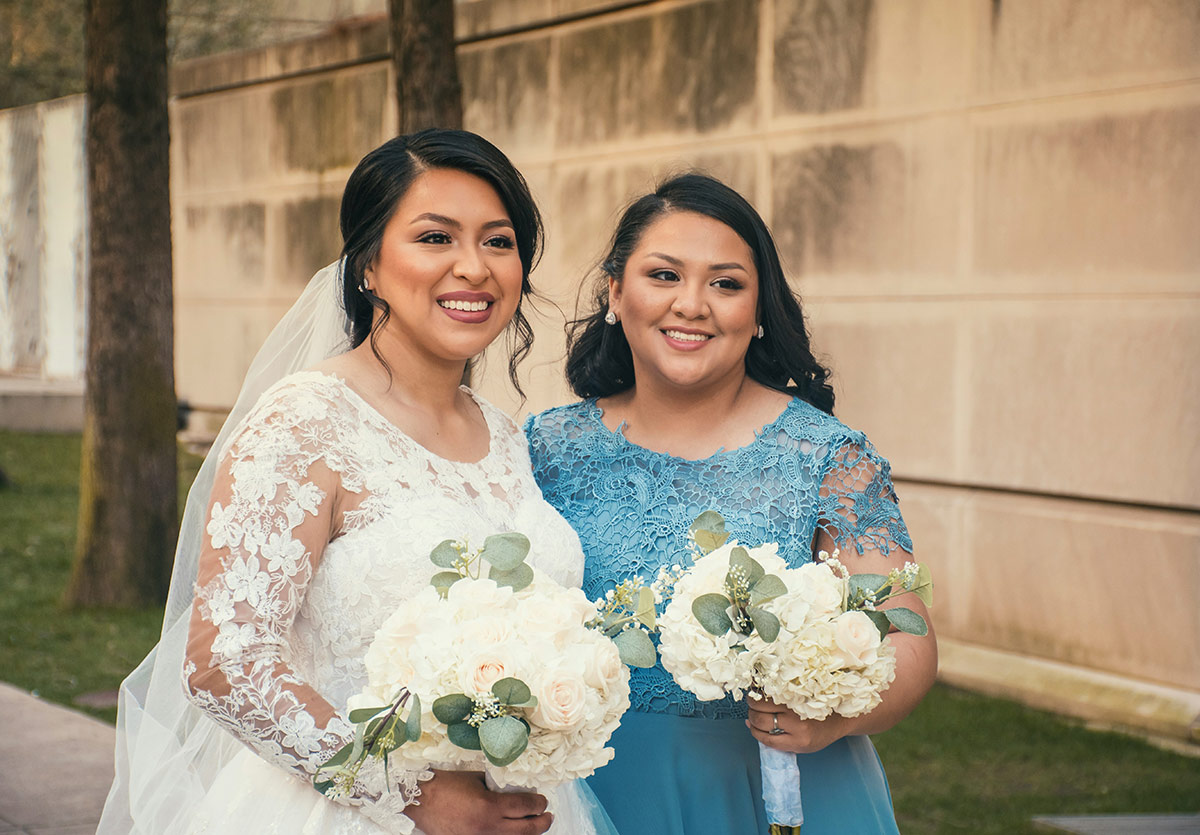
Lace introduces texture and depth without adding weight. Lace overlays, lace sleeves, and lace bodice panels are associated with ceremony formality and are especially appropriate for church and cathedral settings.
Organza is crisp, structured, and voluminous. It is typically used in dramatic floor-length skirts, capes, and overskirts where volume and presence are the priority.
Mikado is a structured silk-blend fabric that holds architectural shape throughout long events. It is frequently used in fitted bodices and formal trouser suits where clean lines are essential.
Sleeve Options That Provide Coverage with Purpose
Sleeves are a functional and aesthetic consideration that has gained significant attention in formal occasion wear for mothers of the bride. Coverage is no longer approached as a concession. It is approached as a design element.
Sheer long sleeves in lace or lightweight georgette provide full arm coverage while maintaining the lightness appropriate to formal occasion wear. They are frequently embellished with beadwork or lace appliqué to add visual detail.
Three-quarter sleeves remain a consistently flattering proportion for formal occasions. They sit at a point that balances coverage with movement and are universally appropriate across ceremony and reception settings.
Flutter and cape sleeves add softness and visual interest without restricting movement. They are a strong choice for mothers who want coverage with a contemporary rather than conservative appearance.
Off-shoulder and one-shoulder necklines offer a modern approach to formal bridal occasion wear and are appropriate for evening and indoor receptions.
Detachable sleeves and capes serve a dual purpose. Worn during the ceremony for full coverage, they can be removed at the reception to reveal a different silhouette, effectively providing two looks within one garment.
Accessories That Complement Without Competing
Accessories at a formal wedding should support the outfit rather than redirect attention. The guiding principle is considered restraint. Choose fewer pieces of higher quality rather than layering multiple items that collectively dilute the impact of the garment.
Jewelry should be purposeful. Soft pearl earrings pair naturally with lace, chiffon, and muted pastels. Crystal drop earrings are appropriate for evening events where the light rewards reflective detail. A fine bracelet or cuff is sufficient wrist coverage. Avoid stacking multiple rings or wearing layered necklaces alongside statement earrings simultaneously.
Footwear requires practical consideration alongside aesthetics. Satin heeled sandals, pointed-toe pumps, or metallic mules are all appropriate choices depending on the formality and setting of the event. Heel height should account for the venue surface, whether that is a carpeted aisle, cobblestone, or grass.
The bag should be an evening clutch or structured satin minaudière at the appropriate scale for a formal occasion. Small enough to hold during greeting and photography without drawing attention, it should coordinate in tone with the outfit without being an exact match.
Hair accessories including small fascinators or pearl-finished hair combs complement formal updos without presenting a practical obstacle during guest greetings and embraces.
Matching Your Outfit to the Specific Wedding Format
The correct formal outfit for the mother of the bride depends in part on the specific setting and ceremony type.
Black-tie and white-tie weddings call for floor-length gowns in satin, crepe, or chiffon, or a formal embellished trouser suit. Jewel tones, navy, and black all serve well in ballroom and formal venue lighting.
Formal church and cathedral weddings are best served by floor-length or midi garments with sleeve coverage or a coordinating jacket. Crepe and lace are appropriate fabric choices, and colors should lean toward champagne, dusty blue, sage, or navy.
Formal hotel and ballroom receptions allow for greater personal expression. Sequined fabrics, metallic brocades, and beaded embellishments perform exceptionally well in artificial ballroom lighting.
Formal garden and outdoor ceremonies call for lightweight chiffon or organza that responds well to natural light and outdoor conditions. Soft pastels and muted tones work appropriately in garden settings, and heel choice should account for the ground surface.
FAQs
Q: Should the mother of the bride match the bridesmaids?
The mother of the bride should coordinate with the bridal party palette rather than replicate it. Complementary tones within the same color family are more sophisticated than exact matching and allow the mother to maintain her own visual identity within the wedding aesthetic.
Q: Is a pants suit appropriate at a formal wedding?
A well-constructed pants suit in a luxury fabric is completely appropriate at a formal wedding. The formality of the garment is determined by the fabric, fit, and styling rather than the silhouette category.
Q: When should shopping begin?
Beginning the search six to nine months before the wedding date is recommended. This window allows adequate time for alterations, which are almost always necessary and significantly affect the final result.
Q: Is black an acceptable color for the mother of the bride?
Black is accepted at formal and evening weddings in 2026. When presented in refined fabrics and styled with appropriate accessories, it reads as sophisticated and deliberate rather than somber.
Q: What if formal dresses do not align with personal style?
Personal comfort in an outfit directly affects how it is worn and perceived. Mothers who are more at ease in tailored separates than in gowns should explore the full range of pantsuits for formal options that align with their natural approach to dressing.
Getting the Decision Right
The mother of the bride is a central figure at a wedding, and her attire should reflect the significance of that role. Selecting a formal dress or a precisely tailored pantsuit that fits correctly, coordinates with the wedding aesthetic, and suits the specific formality of the event is the clearest path to getting this decision right.
Start early. Allow sufficient time for alterations. Communicate with the bride about the color palette before shopping begins. Prioritize fit above all other considerations. The outfit that fits well and feels right is always the one that photographs best and is remembered longest.