
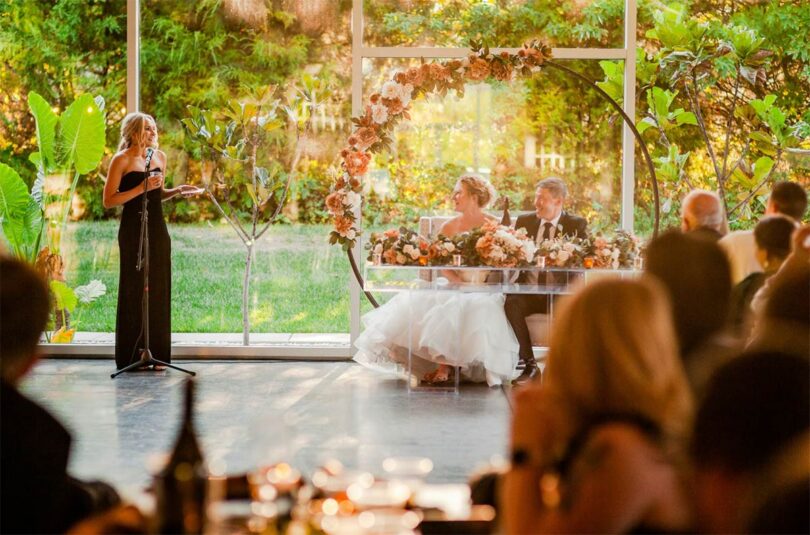
There is a strange kind of pressure that comes with giving a wedding speech. You are not being asked to deliver a business presentation, argue a case, or stand on stage because public speaking is your natural habitat. You are usually there because you are someone’s sibling, parent, best friend, bridesmaid, groomsman, or longtime witness to their life. That makes the speech more meaningful, but also much harder.
A wedding speech asks you to do several things at once. You have to be warm without becoming too sentimental, funny without making anyone nervous, personal without telling stories that only three people understand, and concise without sounding rushed. On top of that, the person or couple you love is sitting right there, probably looking at you with full emotional expectation. No wonder even confident people suddenly find themselves staring at a blank page.
The good news is that a great wedding speech does not require you to become a polished public speaker overnight. In fact, the best speeches rarely feel polished in that glossy, professional sense. They feel specific, steady, human, and true to the person giving them. The goal is not to perform a perfect toast. The goal is to say something real, in a shape the room can follow.
If you are nervous, emotional, or simply not a natural speaker, you do not need a gimmick. You need a practical way to get from scattered memories to a speech that feels clear, personal, and possible to deliver.
Start by lowering the stakes of “great”
Most nervous speakers make the same mistake before they write a single line: they imagine the speech has to be remarkable. They picture a room laughing at exactly the right moment, tearing up at exactly the right moment, and remembering the toast as one of the highlights of the night. That is a lot to ask of yourself before you have even opened a document.
A wedding speech does not need to be brilliant. It needs to be generous. It needs to make the couple feel seen. It needs to give the room a small window into why this person, this relationship, or this marriage matters to you. That is already enough.
This shift matters because nervous writers often chase impressiveness. They start looking for clever opening lines, dramatic quotes, perfect jokes, or sweeping statements about love. Those things can work, but only when they serve the actual point of the speech. Most of the time, the stronger move is simpler: choose one honest emotional thread and build around it.
Instead of asking, “How do I make this amazing?” ask, “What do I want the couple to feel when I sit down?” Maybe you want your sister to feel known. Maybe you want your son to feel proud. Maybe you want your best friend’s new spouse to feel fully welcomed into the circle. That answer will make the speech easier to write and much easier to deliver.
Decide what job your speech is doing
A nervous speaker needs clarity more than inspiration. Before you write, decide what role your speech is meant to play in the room. Are you giving the crowd a warm introduction to the couple’s relationship? Are you sharing a memory that captures the bride or groom at their best? Are you welcoming someone into the family? Are you giving a toast that balances humor and gratitude?
Once you know the job, you can stop trying to include everything. This is where a lot of wedding speeches go wrong. The speaker feels responsible for representing a whole friendship, a whole childhood, or a whole lifetime. So the speech becomes a highlight reel: how you met, every funny phase, every trip, every inside joke, every emotional milestone, every quality you admire. The intention is loving, but the result can feel crowded.
A stronger wedding speech usually has one center of gravity. For example: “My brother has always shown love through loyalty.” Or: “My best friend has become more herself in this relationship.” Or: “What I love about them as a couple is how easy they make home feel.” Once you have that center, every story and line has a purpose.
For a nervous speaker, this is calming. You are not carrying the entire relationship on your shoulders. You are offering one clear, well-chosen piece of it.

Use a simple structure, but do not sound like you downloaded one
Structure is your friend, especially if you are worried about freezing or rambling. The trick is to use structure underneath the speech, not as the personality of the speech. Guests should feel guided, not marched through a template.
A reliable wedding speech structure looks like this: introduce your connection to the couple, share one specific story or observation, explain what that story shows, say something warm about the relationship, and end with a direct toast or wish. That is enough. It gives you a beginning, middle, and end without forcing you into stiff, formal language.
The problem starts when the structure becomes too visible. Lines like “Webster’s Dictionary defines love as…” or “For those of you who don’t know me…” are not always wrong, but they can make a speech feel assembled from parts. You want the bones to be sturdy, but the voice to feel like yours.
Try writing the plain version first. For example: “I’m Dan, and I’ve known Michael since we were thirteen, which means I’ve seen every version of him, including several that should not be described at a formal event.” That kind of opening tells the room who you are and sets a tone without sounding like a stock introduction.
You can be casual. You can be warm. You can be lightly funny. The structure should make you feel safer, not make you sound like someone else.
Choose one story that proves the point
A story is usually what turns a wedding speech from generic to personal. But not every story belongs in a wedding speech. The best story is not necessarily the funniest, most dramatic, or most embarrassing one. It is the one that quietly proves the emotional point you are making.
If your point is that your friend is loyal, choose a story where they showed up when it mattered. If your point is that your sibling has softened in the best way since meeting their partner, choose a moment that shows that change. If your point is that the couple brings out each other’s courage, choose a small scene where that was visible.
The story does not have to be huge. In wedding speeches, smaller is often better. A tiny, specific memory can carry more feeling than a grand summary. The way someone always saved you a seat. The way they called you before a big decision. The way their partner learned the family’s weird traditions without complaint. These details make the speech feel lived-in.
Once you pick the story, keep it lean. Set the scene quickly, include the detail that matters, and move to what it shows. Nervous speakers often over-explain because they are afraid the audience will not understand. Trust the room more than that. They do not need the entire backstory. They need the moment and the meaning.
Write for the ear, not the page
Wedding speeches are meant to be heard. That sounds obvious, but many people write them like essays: long sentences, formal transitions, polished phrasing, and words they would never say in real life. Then they stand up and feel trapped inside language that does not fit their mouth.
The fastest way to improve a wedding speech is to read it out loud. Not silently. Not in your head. Out loud, at normal speaking speed. You will immediately hear which sentences are too long, which jokes sound forced, and which lines feel more written than spoken.
If a sentence makes you run out of breath, split it. If a phrase feels too fancy, replace it. If you would be embarrassed to say it to the couple in a regular conversation, do not say it into a microphone. A wedding speech can be graceful without being grand. It can be emotional without sounding like a greeting card.
This is also where outside help can be useful, as long as it does not flatten your voice. A resource like a little help shaping the stories you already have into something you can actually say out loud can make sense when the hard part is not caring enough, but turning real memories into a speech that feels natural in your own voice.
The key is to keep testing the speech by speaking it. Your body will tell you what your document will not.
Do not apologize for being nervous
One of the most common nervous-speaker habits is opening with an apology. “I’m not good at speeches.” “I’ll keep this short because no one wants to hear me talk.” “Sorry in advance.” It feels humble, but it starts the room in the wrong place.
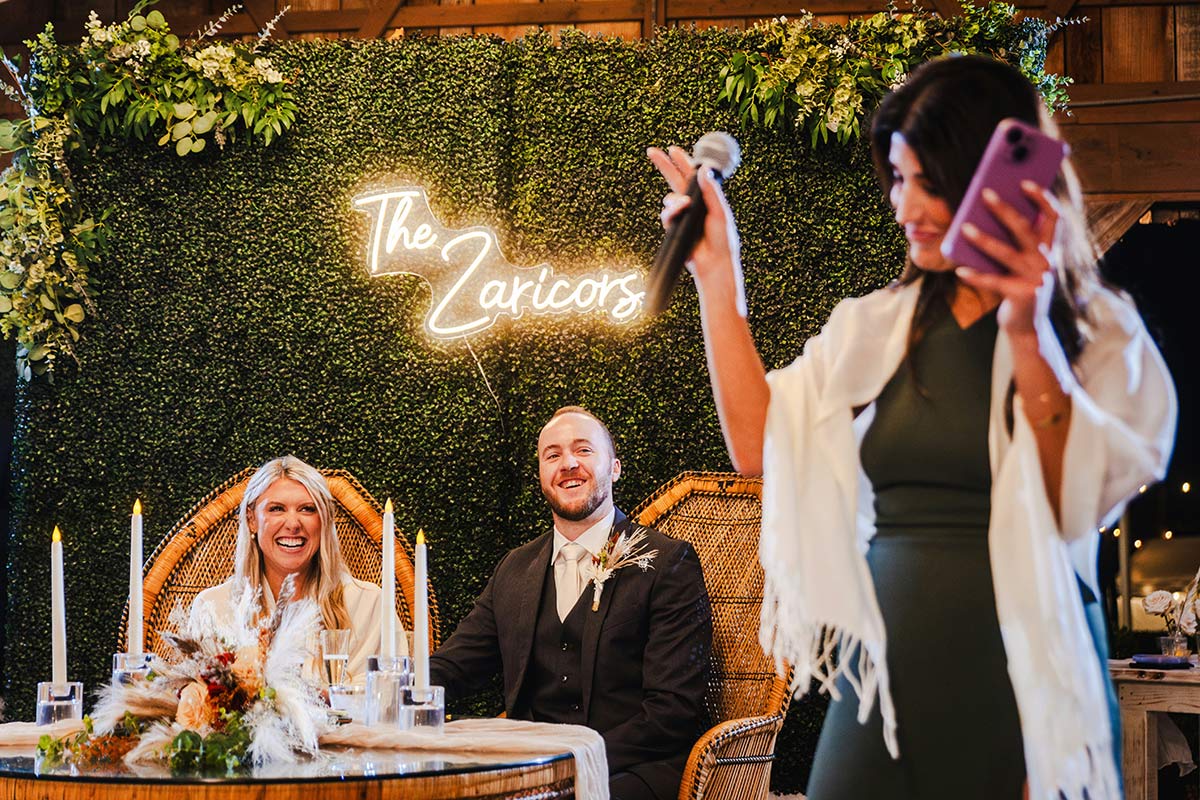
Guests are not sitting there hoping you fail. They are rooting for you, especially because everyone understands that wedding speeches are emotionally loaded. You do not need to warn them that you are nervous. You can simply begin.
If you want to acknowledge the moment, do it warmly instead of apologetically. You might say, “I’m really honored to be standing here,” or “It is very hard to sum up someone you love this much in a few minutes, but I’m going to try.” That gives the emotion a place to go without making your nerves the subject of the speech.
Confidence in a wedding speech does not mean acting fearless. It means giving the room a clear first sentence and trusting yourself to continue.
Plan for emotion instead of fighting it
Many people are not afraid of speaking. They are afraid of crying, shaking, losing their place, or having their voice catch in front of everyone. That fear can become so big that it makes the speech harder than it needs to be.
The better approach is to plan for emotion. Leave space in the speech for pauses. Print the speech in a large, readable font. Put paragraph breaks where you might need to breathe. Mark one or two places where you know you might get emotional. Practice continuing after those lines, not avoiding them.
If you do get emotional, pause. Look down. Breathe. Smile if you can. Then keep going. A brief pause usually feels much longer to the speaker than it does to the room. Guests will not judge you for caring. In many cases, that moment will make the speech feel more human.
What you do not want is to build a speech that depends on you being perfectly composed. If there is one line that feels too intense to deliver, soften it slightly. You can still be heartfelt without pushing yourself into a place where you cannot speak.
Cut the parts nervous speakers tend to hide behind
When people feel uncertain, they often add more. More backstory, more jokes, more compliments, more explanations, more context. But a wedding speech usually gets stronger when you cut the material that is protecting you from the point.
Cut the long origin story if it takes too much time to reach the couple. Cut any inside joke that needs a footnote. Cut jokes that rely on making someone look bad. Cut anything you included only because you felt guilty leaving it out. Cut vague compliments like “amazing,” “kind,” and “beautiful inside and out” unless you attach them to something concrete.
Also cut the overly formal transitions. You probably do not need “with that being said,” “in conclusion,” or “as we gather here today.” Those phrases make people sound less comfortable than they are. Say what you mean and keep moving.
A helpful editing test is this: if you removed a paragraph, would the couple still feel loved and the room still understand your point? If yes, you can probably cut it.


Practice in a way that actually helps
Practice does not mean memorizing the speech until you sound like an actor reciting lines. For most nervous wedding speakers, memorization creates more pressure. If you lose one sentence, you feel like the whole thing has collapsed.
Instead, practice familiarity. Know the shape of the speech. Know your first two lines very well. Know the story you are telling and the emotional point you are making. Practice aloud enough times that the words feel familiar, but allow yourself to use the printed page.
Time yourself once or twice, but do not obsess over the exact number. A good wedding speech is often around three to five minutes, though the right length depends on the role and the event. What matters more is whether the speech has forward motion. If it starts repeating the same emotional point, it is too long.
Practice standing up. Practice holding the paper or phone you will actually use. Practice looking up at least a few times. You do not need constant eye contact, but you want to avoid reading the entire speech into the page. Even one glance at the couple during a sincere line can make the speech feel more connected.
Make your ending simple and direct
Endings are where nervous speakers often get tangled. They feel the speech should build to something profound, so they reach for a quote, a dramatic statement, or a long final paragraph about love. Sometimes that works. Often, it makes the ending heavier than the speech needs.
A strong ending can be very simple. Speak directly to the couple. Name what you wish for them. Invite the room to raise a glass. That is all a toast needs to do.
For example: “I hope your life together keeps giving you more of what we already see in you tonight: laughter, steadiness, and the kind of love that makes everyone around you feel at home. To both of you.”
That ending is not trying to win the room. It is giving the room somewhere clear to land. For a nervous speaker, that matters. You want to know where the speech is going before you stand up.
Remember that the room is on your side
A wedding audience is usually one of the kindest audiences you will ever have. They are not there to critique your transitions or judge whether your delivery is professional. They are there because they care about the couple, and your speech is another way of celebrating them.
That does not mean you should wing it. Preparation is a form of respect. But it does mean you can let go of the fantasy that every line has to land perfectly. A slightly shaky voice, a pause, a laugh that comes out softer than expected, a sentence you skip because you are emotional: none of that ruins a speech.
What guests remember is whether the speech felt honest. They remember the story that made the couple smile. They remember the line that made the room understand something about the relationship. They remember the warmth.
If you need a place to begin, Evermore Bliss is built around the idea that a wedding speech should sound personal, not like a polished script handed to you by someone who has never met the people in the room.
That is the real standard. Not flawless delivery. Not a viral toast. Not the funniest speech of the night. Just a few minutes of clear, generous, specific words that sound like they could only come from you.
A final checklist before you stand up
Before the wedding day, give yourself one last practical check. Does the speech have one clear emotional point? Is there one specific story or observation that supports it? Have you cut the lines that sound generic, overly formal, or included out of obligation? Have you read it aloud enough times to know where you need to breathe?
Make sure the speech is easy to read. Print it or format it on your phone with plenty of spacing. Do not rely on a tiny block of text. Put pauses where they belong. Bold or separate the opening line if that helps you start calmly. Save a backup copy. Bring water. Avoid drinking too much before you speak, even if it feels like it will calm you down.
Then, when the moment comes, stand up, take a breath, and begin with the first sentence you practiced. You do not have to become someone else for the speech to work. You only have to be steady enough to say what you came to say.
The couple did not ask you to speak because you are perfect at public speaking. They asked because you matter to them. Let that be the thing you remember. The speech is not a performance you have to survive. It is a small, public act of love. And that is something you are already qualified to give.