
There is a particular kind of bride who travels to New York for her wedding dress, and she does not always live there. She might be flying in from London, Paris, Singapore, or Sydney, or she might be driving up from Atlanta or Charleston. What unites her is a refusal to settle for whatever bridal her local market happens to stock. Manhattan’s bridal designers occupy a category of their own: a concentration of couture-level craftsmanship, atelier transparency, and design vision that no other American city, and arguably no other Western city outside Paris, can match. This is a guide to nine of the houses worth the journey, from the established heavy-hitters to the smaller independent ateliers most brides have not yet heard of.
Why Brides Are Choosing New York for Dress Shopping
The honest answer is that nowhere else combines the talent density and the appointment infrastructure in quite the same way. Within a forty-block radius of Midtown, a bride can move between four or five serious ateliers in a single day, working with master patternmakers, in-house seamstresses, and the designers themselves rather than sales representatives. The city’s Garment District remains the operational backbone of American bridal couture, with most of the houses on this list cutting and constructing their gowns within a few subway stops of one another. For international brides, that geographic compression matters: a single trip can accomplish what would otherwise take three.
The other draw is selection. New York hosts both the legacy houses (Reem Acra, Naeem Khan, Pnina Tornai at Kleinfeld) and the rising independents working with a different design vocabulary entirely. A bride from Houston or Hamburg arrives in Manhattan with the option to try on three completely different aesthetic philosophies, and that breadth is rare anywhere else. New York is also where the bridal fashion week schedule lives, which means the city is consistently a season ahead of every retailer outside it.
The Ultimate Guide to Manhattan’s Finest Bridal Ateliers
| Atelier | Location | Starting Price | Best Known For |
| 1.Danielle Frankel | 260 W 39th St, NYC and 8475 Melrose Place, Los Angeles, CA 90069 | From $3,950 | Classic, modern bridal made in the Garment District |
| Reem Acra | 501 Fifth Ave, NYC | On request | Embroidered couture with Lebanese craft heritage |
| 2.Naeem Khan | 260 W 36th St, NYC | From $5,000 | Hand-beaded gowns with Indian textile influence |
| 3.Anne Barge | 35 East 67th St, NYC | From $3,700 | Modern-classical bridal with Southern grace |
| 4.Pnina Tornai | Kleinfeld, 110 W 20th St, NYC | From $6,000 | Statement corsetry and crystal embellishment |
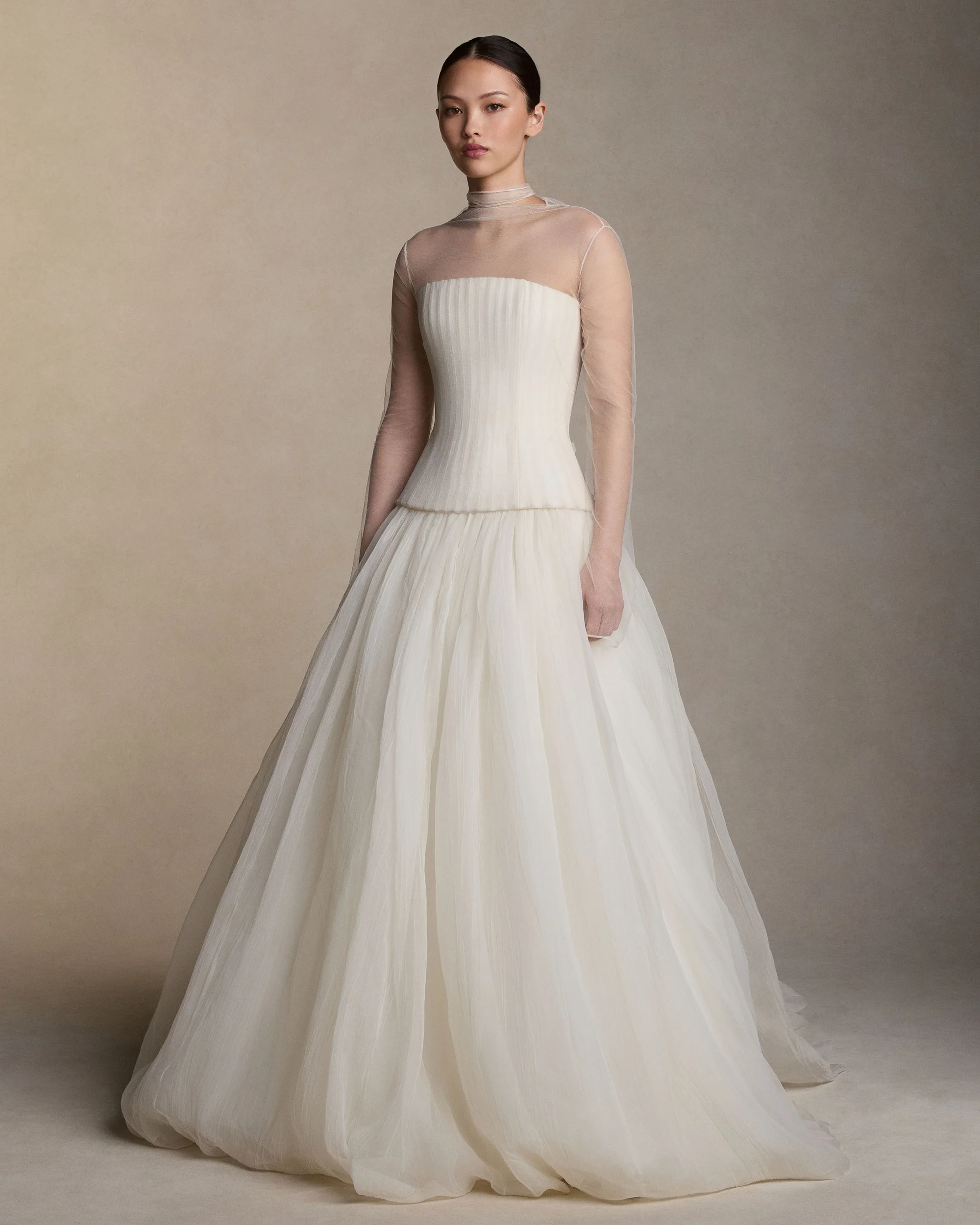
Danielle Frankel
Danielle Frankel has reframed what a serious modern wedding gown can look like over the past few years. Founded in 2017 by Parsons-trained designer Danielle Frankel Hirsch, the house produces every gown in the New York City Garment District with the kind of patternmaking discipline you usually find only in European couture. The aesthetic is sculptural and forward-looking without sacrificing wearability: the dresses are both bridal and anti-bride; built for movement above all. The house occupies a rare position between the directional editorial bridal world and the practical atelier model, with a clear two-track offer of made-to-order from the collection or fully bespoke commissions designed from scratch. The house has been notably worn by Zoë Kravitz and Julia Garner.
- Made-to-order pricing transparent on the website (from $3,950)
- Fully custom design service available with the designer directly
- Remote video consultations for international brides, with fittings at the NY atelier
- Genuinely directional design vocabulary that stands apart from traditional bridal
- Known for collaborations with editorial photographers (Paolo Roversi shot the most recent collection)
- Worn by influential faces in fashion across film, music and modelling
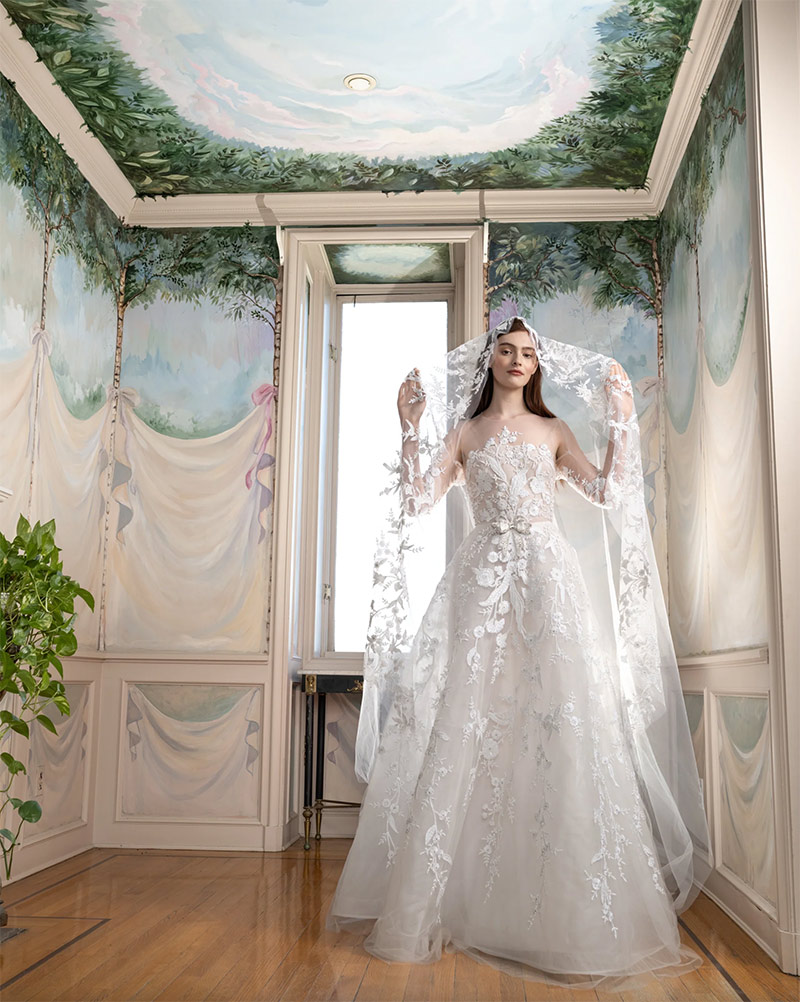
Reem Acra
A Beirut-born designer trained at FIT, Reem Acra has been a fixture of New York bridal since launching her label in 1997, with a Fifth Avenue atelier specialising in heavily embroidered, ornamental gowns that draw on Lebanese textile traditions.
- Strong embroidery heritage, particularly Silk Road–inspired jacquards and intricate hand-beadwork
- Long celebrity dressing history including former First Lady Jill Biden and Allison Janney’s 2018 Oscar gown
- Both bridal and ready-to-wear collections, with international retail
- Aesthetic sits firmly in the ornate register, with limited options for brides drawn to modern minimalism
- Online reviews of the bespoke commission process are mixed, with some brides reporting fit issues with custom orders







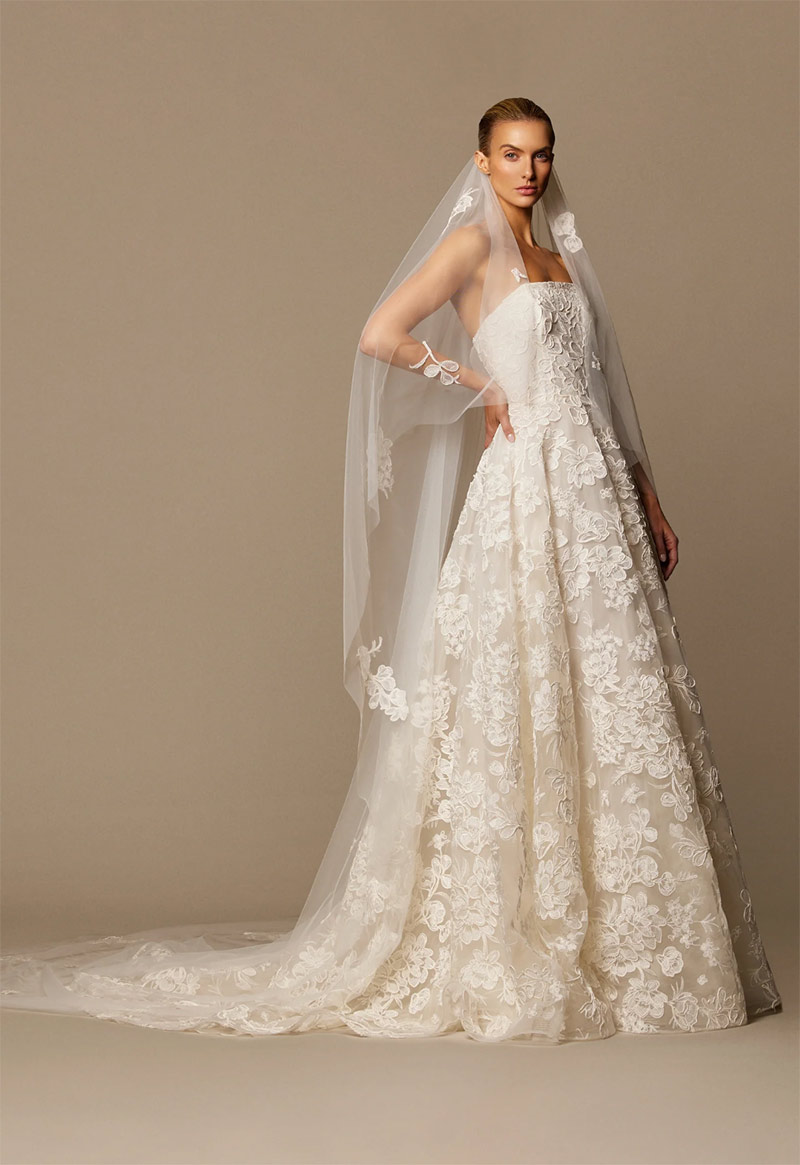
Naeem Khan
A Mumbai-born, New York–based designer who launched his bridal collection in 2013, drawing on a family heritage of textile craftsmanship for Indian royal families and an apprenticeship under Halston in his early career.
- All bridal designed and produced in the Naeem Khan New York studio at 260 West 36th Street in the Garment District
- Distinctive maximalist aesthetic with hand-beadwork, embroidery, and statement embellishment
- Worn by Beyoncé, Jennifer Lopez, Kate Middleton, and former First Lady Michelle Obama
- Pricing sits firmly at the upper end (typically $5,000 to $18,000)
- Aesthetic skews dramatic and embellished, which can feel out of step with the current trend toward minimalist bridal
- Lead times are often longer than the industry standard given the level of handwork involved
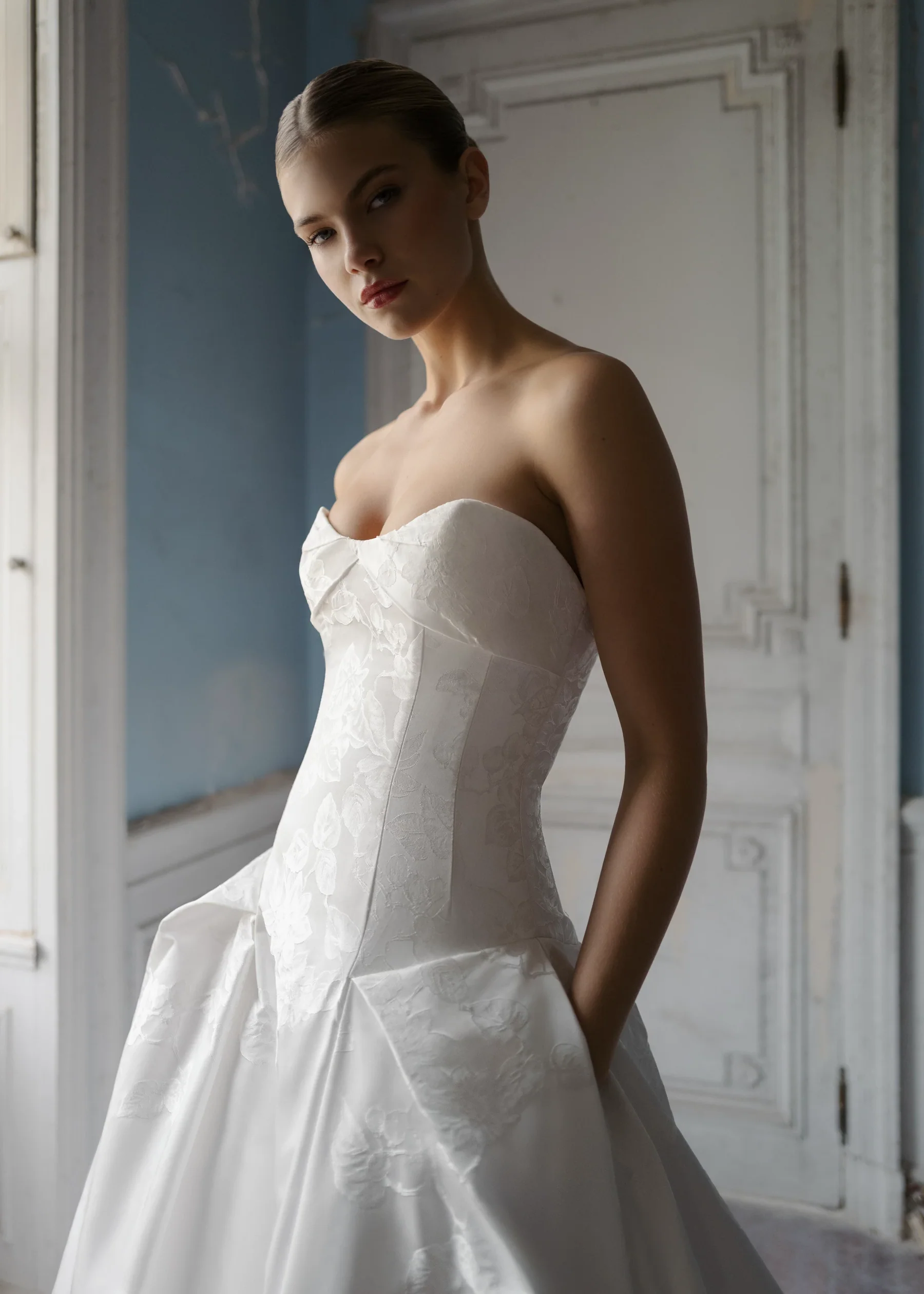
Anne Barge
Founded in 1999 in Atlanta and now operating from a New York atelier on East 67th Street, Anne Barge is led by creative director Shawne Jacobs and is known for its “modern classical” aesthetic, with timeless silhouettes refreshed with contemporary detailing.
- New York atelier on the Upper East Side, with a second flagship in Atlanta
- Anne Barge Couture line ranges from $3,700 to $14,000, with a more accessible Blue Willow line starting at $1,970
- Size-inclusive across all collections (sizes 0–22 and 16SP–24SP)
- Aesthetic sits in the classic-feminine register, which reads beautifully in photography but feels less editorial than houses pushing more directional design
- The house’s positioning between Atlanta and New York means the design conversation is split across two cities, which can affect responsiveness for custom commissions
- Less press visibility than New York’s most established names, which can be a positive (the appointments are easier to book) or a negative (less editorial validation)
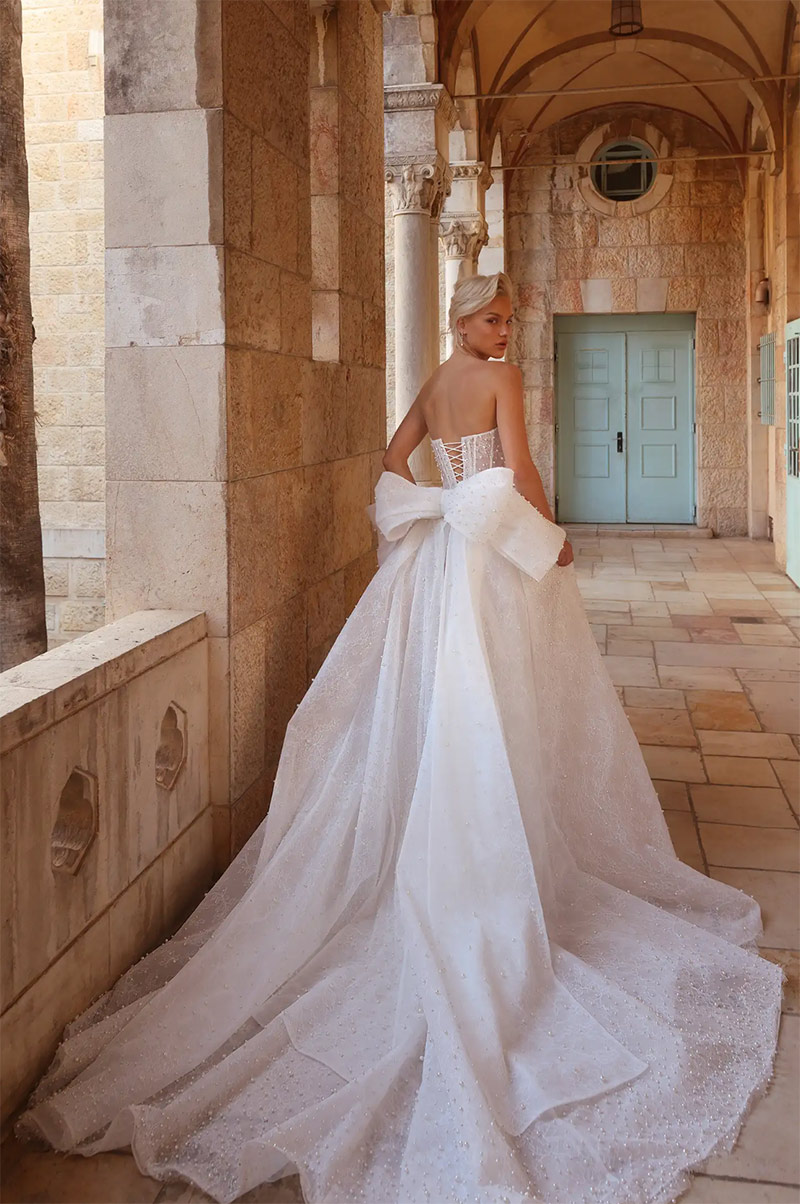
Pnina Tornai
The Israeli designer behind one of the most recognisable bridal brands in New York, Pnina Tornai has been the exclusive couture designer at Kleinfeld since 2004 and is known to a global audience through TLC’s Say Yes to the Dress.
- Sold exclusively through Kleinfeld’s Manhattan flagship, with Tornai personally meeting clients during her two weeks per month in New York
- Signature corseted silhouettes, sheer panels, and Swarovski crystal embellishment
- Bridal couture pricing starts at $6,000 with custom VIP appointments at $250
- A more accessible Love by Pnina Tornai diffusion line is available at lower price points
- Aesthetic is unmistakably maximalist (heavy embellishment, sheer corsetry, bold beadwork), which dates more quickly than minimalist design and can read as “of its era”
- The Kleinfeld and Say Yes to the Dress association is a draw for some brides and a disqualifier for others, depending on how the wedding is being styled
5 Things to Look For in a New York Bridal Boutique
The difference between a serious New York atelier and a glossy showroom that imports its gowns from a factory abroad is not always obvious from the outside. Here are five questions you should be asking before booking:
- Is the dress made in the city? New York’s reputation rests on the Garment District infrastructure. The houses worth paying for are the ones whose patternmakers and seamstresses are working on the same floor as the designer, not subcontracting to factories overseas.
- How many fittings are included? A serious bridal commission involves at least two and ideally three fittings. Houses that include this in their pricing tend to be the ones operating at couture standard. Houses that charge per fitting or limit you to one are running on a different cost model.
- Can the designer participate in the consultation? At the smaller ateliers, the designer is in the room. At the larger houses, you may meet a sales associate who has been trained on the collection but does not influence the design. Both can work, but you should know which experience you are paying for.
- What is the alteration policy? New York ateliers typically include initial alterations in the gown price; outside ateliers often charge separately at $500 to $1,000+ for a full alteration package. Ask early.
- Is the price quoted final? Some houses publish a starting price that bears little relation to what you will actually pay once fabric upgrades, sleeve modifications, and customisation fees are added. Ask for a written quote before placing an order.
FAQs
How long has New York been a centre for bridal design?
Manhattan’s bridal industry traces back to the early twentieth century, when the Garment District established itself as the production heart of American womenswear. The bridal segment grew significantly in the post-war decades, with Kleinfeld (originally a Bay Ridge, Brooklyn fur and clothing store that began selling exclusively bridal in 1968 and relocated to Manhattan in 2005) becoming one of the city’s most recognisable bridal destinations.
Do I need to live in New York to commission a New York bridal designer?
No, and most New York ateliers actively work with international and out-of-state brides. The standard model is initial consultation by video, with two to three trips to New York for fittings during the construction phase. Houses experienced with international brides will consolidate fittings into longer visits and coordinate timing around your other commitments. Allow at least nine months from initial consultation to wedding date for made-to-order gowns, and twelve to eighteen months for fully custom commissions.
What are bridal trunk shows and should I attend one?
Bridal trunk shows are limited-time events at which a designer brings their newest collection to a retailer for a few days, often with the designer or a senior representative present. They are useful for brides who want first access to a collection (some pieces are only available during the trunk show window), and they sometimes come with promotional incentives like waived rush fees or accessory credits. Most New York retailers post their trunk show calendar a few months in advance.
What is the typical lead time for a New York wedding dress?
For a made-to-order piece from a designer’s existing collection, twelve to sixteen weeks of production is standard, with another two to three months for fittings and alterations. For fully custom commissions, six to nine months of production is more typical, given the additional pattern-making and sample stages. Most New York ateliers can accommodate shorter timelines for an additional rush fee, but quality is rarely improved by speed. Always ask if you’re unsure or working on a tight timeline.
Can I bring guests to my bridal appointment?
Most New York ateliers cap appointments at two or three guests, and a few of the smaller independent studios prefer just one. It’s best to reach out to the house or boutique if you want to bring more than one person, just to be on the safe side.